

Best Mushrooms for Plant Based Cooking
Table of Contents
- Why Mushrooms Are the Backbone of Plant Based Cooking
- Quick Comparison: Best Mushrooms for Plant Based Cooking
- Best Mushrooms for Meat Substitute: Texture, Flavor, and Price
- How to Cook Lion's Mane Mushroom So It Browns, Not Steams
- King Oyster Mushroom Recipes for Plant Based Mains
- Oyster Mushroom Recipes Vegan Home Cooks Can Master
- Preparation, Storage, and Food Safety Basics
- Frequently Asked Questions
Last Updated: October 14, 2026
Why Mushrooms Are the Backbone of Plant Based Cooking
Mushrooms solve the hardest problem in plant based cooking: they deliver the savory, meaty quality vegetables alone rarely provide. Their natural glutamates create umami, the deep savory taste that makes a dish feel complete.
The best mushrooms for plant based cooking are the ones with firm structure and high umami: Lion's Mane, King Trumpet, and Oyster varieties top that list. According to the USDA's food composition database, mushrooms also supply protein, B vitamins, potassium, and fiber with very few calories, which is why they anchor so many vegan and vegetarian recipes.

Below, we rank varieties by how they perform as a meat substitute, then give you the techniques and recipes that make them work.
Quick Comparison: Best Mushrooms for Plant Based Cooking
The table below matches each variety to its texture, best cooking method, and best use on a plate.
| Variety | Texture | Best Cooking Method | Best For | Price |
|---|---|---|---|---|
| Lion's Mane | Meaty, steak-like | Sear, roast | Steaks, main courses | $22.99 |
| King Trumpet | Firm, scallop-like | Sear, grill, roast | Rounds, strong mains | $5.99 |
| Blue Oyster | Firm, mild, nutty | Sauté, stir-fry | Quick dishes, pasta | $19.99 |
| Shiitake | Meaty, chewy | Sauté, grill, broth | Umami depth, noodles | $6.99 |
| Maitake | Firm yet tender | Roast, sauté | Soups, grain bowls | $24.99 |
| Chestnut | Firm, nutty | Sauté, braise | Burgers, stroganoff | $9.99 |
Best Mushrooms for Meat Substitute: Texture, Flavor, and Price
Texture decides whether a mushroom works as a meat substitute. The best candidates have dense, fibrous flesh that resists turning soft, so they can be seared hard and served as the center of the plate.

Our framework scores each variety on structure (does it hold a shape under high heat?), umami (does it taste savory without heavy seasoning?), and cost per serving.
Lion's Mane: The Steak-Like Standout
Lion's Mane is the closest thing to a steak in the mushroom world. Its shaggy shape tears into thick pieces with a dense, fibrous bite, and its delicate, slightly seafood-like flavor takes on butter, garlic, and lemon beautifully. We sell it fresh at $22.99, and recommend it first for a plant-based main that satisfies meat eaters.
- Structure: Highest of the group. Holds a thick cut and develops a crust.
- Flavor: Mild and slightly sweet, with a faint shellfish note.
- Best cooking method: Sear or roast whole, then slice.
King Trumpet: Scallop-Style Rounds and Strong Mains
King Trumpet, also called King Oyster, brings a firm, meaty texture and mild umami at $5.99, making it the best value in this group. Sliced into thick rounds and seared, it develops a golden crust chefs compare to scallops, and holds its shape under high heat.
- Structure: Very high. The thick stem is the usable part.
- Flavor: Mild, clean, and savory, a blank canvas for bold seasoning.
- Best cooking method: Sear, grill, or roast in thick rounds.
Shiitake: Umami Depth for Broths and Noodles
Shiitake is the umami specialist. Its meaty, chewy cap and woodsy flavor make it the variety to reach for when a dish needs savoriness rather than a centerpiece protein. Fresh shiitake runs about $6.99; dried is often cheaper per ounce and more concentrated, rehydrate in warm water and use the soaking liquid as stock.
- Structure: Medium. Chewy but softer than Lion's Mane.
- Flavor: Strong, woodsy, and distinctly savory.
- Best cooking method: Sauté, grill, or simmer into broth.
Maitake: Tender Structure for Bowls and Braises
Maitake, sometimes called hen of the woods, grows in overlapping fronds that crisp at the edges and stay tender inside. At $24.99 it is a premium pick, but its ruffled structure traps sauce and seasoning in a way smooth mushrooms cannot.
- Structure: Firm yet tender; best torn, not sliced.
- Flavor: Earthy and peppery, with a deep savory finish.
- Best cooking method: Roast or sauté at high heat.
Chestnut: The Mild, Budget-Friendly Choice
Chestnut mushrooms are the entry point for anyone who thinks they dislike mushrooms. Their nutty, earthy flavor is milder than shiitake, they brown well in a simple sauté, and at $9.99 they are affordable enough to cook often. They are also the best pick for burgers and stroganoff, where a firm, mild mushroom blends into a rich sauce.
- Structure: Firm and snappy.
- Flavor: Mild, nutty, and low on the earthy intensity people object to.
- Best cooking method: Sauté or braise.
Blue Oyster: Fast, Mild, and Versatile
Blue Oyster mushrooms have a firm bite and a mild, slightly nutty flavor that works in quick-cooking dishes. At $19.99 they sit mid-range, and their thin, fan-shaped caps cook in minutes, ideal for pasta, stir-fries, and any dish where speed matters more than a thick cut.
- Structure: Firm but thin; crisps at the edges.
- Flavor: Mild and nutty.
- Best cooking method: Sauté or stir-fry.
How to Choose at a Glance
For a steak, choose Lion's Mane. For scallops or a budget grilled main, King Trumpet. For umami in broth or noodles, Shiitake. For a tender, sauce-catching centerpiece, Maitake. For a mild, affordable everyday mushroom, Chestnut. For something fast and versatile, Blue Oyster.
How to Cook Lion's Mane Mushroom So It Browns, Not Steams
To cook Lion's Mane so it browns, tear it into thick pieces, dry the surface, and sear in a hot pan without crowding.
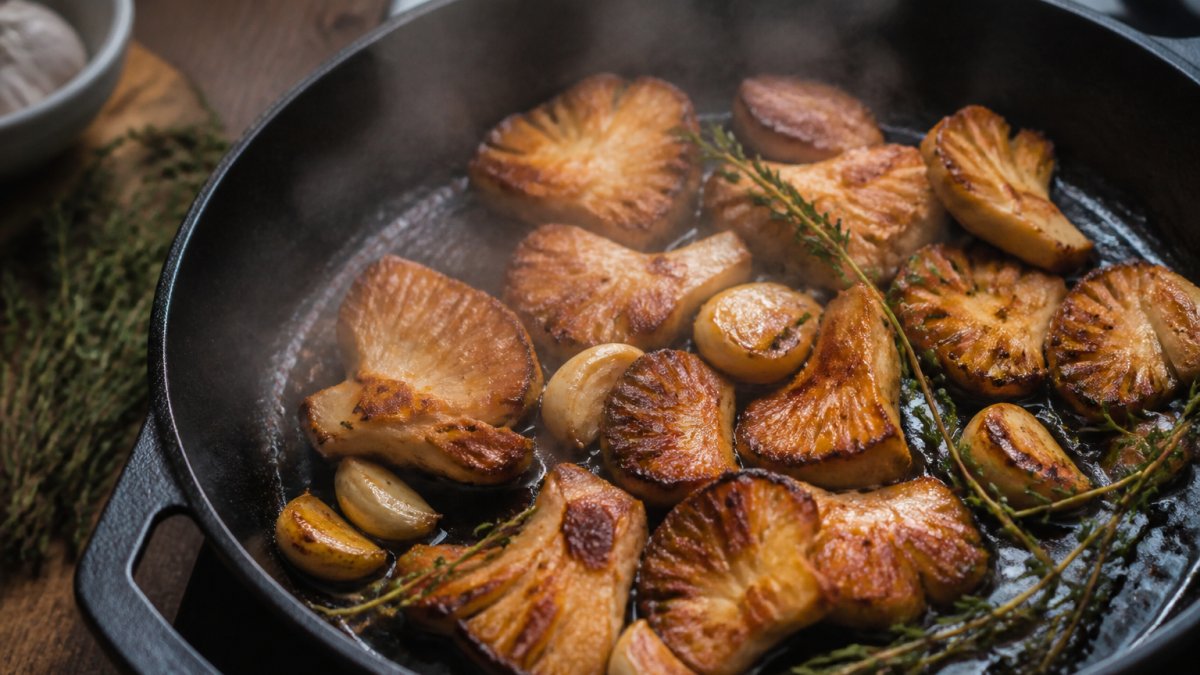
Here is the method we use:
- Tear or slice the Lion's Mane into thick, steak-like pieces. Tearing creates more surface area than slicing.
- Pat the pieces dry with paper towels. Surface moisture is the enemy of browning.
- Heat oil or butter in a skillet over medium-high heat until it shimmers.
- Lay the pieces in the pan with space between them. Cook 4 to 5 minutes per side until golden and slightly crispy.
- Add minced garlic and cook one minute, then finish with lemon juice, salt, pepper, and fresh herbs.
The mistake most cooks make is crowding the pan. Mushrooms release water as they heat, and if they touch, that water turns to steam and the pieces poach instead of searing.
King Oyster Mushroom Recipes for Plant Based Mains
King Oyster recipes work best when the mushroom is treated like the protein, not a garnish. Its firm flesh stands up to high heat and bold seasoning, so these two dishes put it front and center.
Seared King Oyster Steaks with Garlic Butter
Slice King Trumpet lengthwise into thick steaks, score the surface, and sear 3 to 4 minutes per side until deeply golden. Lower the heat, add butter and minced garlic, and spoon the foaming butter over the steaks for a minute. Finish with salt, pepper, and parsley. The result is a juicy, smoky main that needs only a green vegetable alongside.
King Oyster Mushroom Tacos with Smoked Paprika
Dice King Trumpet into bite-size pieces and sauté in olive oil until browned. Season with smoked paprika, cumin, and salt, then pile into warm tortillas with avocado, red onion, and lime. The smoky seasoning and meaty texture make these tacos a filling plant-based main rather than a side.
Oyster Mushroom Recipes Vegan Home Cooks Can Master
Oyster mushroom recipes vegan cooks return to lean on texture. Blue Oyster mushrooms, which we sell fresh at $19.99, have a firm bite and a mild, slightly nutty flavor that works in quick-cooking dishes. Both recipes below come together in under 30 minutes and depend on the same technique: get the pan hot, keep the mushrooms dry, and do not crowd them.
The Technique That Makes or Breaks Oyster Mushrooms
Oyster mushrooms are thin and high in water, so they steam before they brown unless you manage moisture. Three rules cover almost every failure:
- Dry them. Wipe with a damp cloth, then pat completely dry. Never soak.
- Tear, do not always slice. Tearing along the natural fronds creates ragged edges that crisp better than clean cuts.
- Use high heat and space. A crowded pan traps steam. Cook in batches if needed, and add salt near the end so it does not draw out water early.
Cooks who dislike oyster mushrooms have usually only had them boiled or overcrowded. Cooked properly, the edges crisp and the interior stays springy.
Crispy Oyster Mushroom Tempura
Whisk flour, cold water, and a pinch of salt until just combined, lumps are fine, and overmixing makes the coating tough. Dip whole Oyster clusters in the batter and fry in hot oil until pale gold and crisp, about 2 minutes per side. Drain on a rack, not paper, so the coating stays crunchy.
- Yield: About 4 servings as an appetizer.
- Key step: Keep the batter cold and the oil hot; a cold batter hitting hot oil is what produces the lightest crust.
- Make-ahead: Fry just before serving. Tempura loses its crunch within about 20 minutes.
Oyster Mushroom and Wild Rice Bowl
Sauté torn Oyster mushrooms in olive oil until the edges crisp, then season with garlic and thyme. Spoon over cooked wild rice with roasted asparagus and a drizzle of tahini. This bowl is one of the simplest dishes in this guide and one of the most satisfying, because the mushrooms carry the savory weight.
- Yield: 2 generous bowls.
- Key step: Cook the mushrooms in a single layer and resist stirring for the first two minutes so a crust forms.
- Substitution: If wild rice is unavailable or too costly, use brown rice or farro; the mushrooms, not the grain, do the heavy lifting.
Oyster Mushroom Pasta with Garlic and Olive Oil
Cook a pot of pasta and reserve a cup of the cooking water. While it boils, sauté torn Oyster mushrooms in olive oil over high heat until deeply browned, then add sliced garlic and red pepper flakes for the last minute. Toss the drained pasta into the pan with a splash of the reserved water to bind the sauce, and finish with lemon zest and parsley.
- Yield: 4 servings.
- Key step: The starchy pasta water turns the oil and mushroom juices into a clinging sauce without any cream.
- Why it works: The mushrooms brown in the time the pasta cooks, so the whole dish is done in about 20 minutes.
Oyster Mushroom Stir-Fry with Ginger and Scallions
Heat a wok or wide skillet until almost smoking. Add oil, then the mushrooms, and stir-fry for 2 to 3 minutes until browned. Add ginger, scallions, and a splash of soy sauce or tamari, toss for 30 seconds, and serve over rice.
- Yield: 3 to 4 servings.
- Key step: Add the sauce at the very end; adding it early steams the mushrooms instead of browning them.
- Substitution: King Trumpet works here if Oyster is unavailable, though it needs a longer cook.
Preparation, Storage, and Food Safety Basics
Clean mushrooms with a damp cloth or a quick rinse and immediate pat-dry, never a long soak. Mushrooms act like sponges, and soaked mushrooms steam instead of brown. Trim tough stems, and save them for stock.
Storage rules that matter:
- Keep mushrooms refrigerated in a paper bag or loosely wrapped in paper towels.
- Skip airtight plastic, which traps moisture and speeds spoilage.
- King Trumpet keeps 7 to 10 days; most other fresh varieties are best within 5 to 7 days.
The FDA's guidance on produce safety notes that fresh produce should be kept refrigerated and handled with clean hands and surfaces. For wild mushrooms, the CDC's advice on mushroom poisoning is blunt: never eat a wild mushroom unless an expert has identified it. Their nutty, earthy flavor is milder than Shiitake, and they brown well in a simple sauté with butter, garlic, and thyme.

Plant-based cooking lives or dies on ingredient quality, and no technique rescues a tired mushroom. Mushroom Direct grows Lion's Mane, King Trumpet, Oyster, Shiitake, Maitake, and Chestnut varieties at our Queens farm, harvests in small batches, and delivers to kitchens across New York within hours of picking.
Frequently Asked Questions
Can you eat mushrooms on a plant-based diet?
Yes. Mushrooms are naturally plant-based and fit vegan and vegetarian diets. They deliver umami and meaty texture that many plant-based dishes lack. Varieties like lion's mane, king trumpet, and oyster mushrooms are especially valued for their steak-like or scallop-like bite. Mushroom Direct grows these varieties at its Queens, NY urban farm and delivers fresh to kitchens across the city.
Which mushroom is the best for a meat substitute?
Lion's mane is the top pick for a meat substitute because of its steak-like texture and mild, slightly seafood-like flavor. King trumpet is a close second, holding its shape under high heat and searing like scallops. Both work well in mushroom burgers, tacos, and stir-fries. For a more budget-friendly option, chestnut mushrooms offer a firm texture that absorbs seasonings beautifully.
How do you cook mushrooms so they turn golden brown?
Use a hot pan and avoid overcrowding. Mushrooms release moisture when they hit heat, so give them space to evaporate that liquid before browning starts. Sear in oil or butter over medium-high heat without stirring for 3-5 minutes per side. For king trumpet, score the cut surface in a crosshatch pattern first. Pat mushrooms dry before cooking and add salt near the end to avoid drawing out moisture too early.
What are the most flavorful mushrooms to cook with?
Shiitake and maitake deliver the deepest umami. Shiitake has an earthy, slightly smoky aroma and a meaty chew that stands up in stir-fries, soups, and noodles. Maitake, also called hen of the woods, brings a woodsy, gently savory flavor with a firm yet tender bite when roasted or sautéed. Chanterelles add a fruity, peppery note with a silky texture that shines in risottos and cream sauces.
How should I store fresh mushrooms to keep them at peak quality?
Keep mushrooms refrigerated in a paper bag or loosely wrapped in paper towels. Avoid airtight plastic, which traps moisture and speeds spoilage. King trumpet lasts 7-10 days this way; lion's mane is best within 5-7 days. Dried varieties like shiitake and morel store in a cool, dark pantry and rehydrate in warm water. Strain the soaking liquid and use it as a savory broth base.