

Find Locally Grown Mushrooms Near You
Table of Contents
- Where to Find Locally Grown Mushrooms
- Local Mushroom Farms and Direct Farm Pickup
- Shopping at Farmers' Markets with Mushrooms
- Mushroom Farm Delivery Options
- How to Choose Fresh Mushrooms
- Verifying Freshness and Sourcing
- Building Your Local Mushroom Supply
- Frequently Asked Questions
Last Updated: October 11, 2026
Where to Find Locally Grown Mushrooms
Finding locally grown mushrooms near me requires a systematic search process rather than hoping to stumble upon a vendor. The best sources fall into several categories, direct farm pickups, farmers' markets, grocery stores with local partnerships, and delivery services, but knowing where to look is the first challenge.
Start with farmers' market directories. The USDA maintains a searchable farmers' market directory at farmersmarketdirectory.org where you can enter your zip code and see all certified markets within your region, along with their operating days and vendor lists. Many market websites now display vendor names and what they sell before you visit, saving a wasted trip. Search for vendors listing "mushrooms" or "fungi" in their product categories.
Search local farm networks and food hubs. Organizations like Local Harvest (localharvest.org) and your state's agricultural department maintain databases of farms, CSA programs, and direct-sales operations. Enter your location and filter by "mushrooms" to see farms within 50 miles. Many farms list their harvest schedules, varieties, and ordering methods directly on these platforms.
Use Google Maps for farm searches. Search terms like "mushroom farm near me," "local mushroom grower," or "farm stand" combined with your city name often surface farms with websites, hours, and customer reviews. Check the farm's website or social media for current availability before visiting, many update their inventory daily or weekly.
Check your state's agricultural extension office. Cooperative Extension offices (typically run by land-grant universities) maintain lists of local producers and can recommend farms in your area. Many also publish seasonal guides to what's available month by month.
Ask at existing farmers' markets. Even if the market you visit doesn't have mushroom vendors, ask other farmers or market managers for recommendations. They often know other growers and can point you toward specialists.
Your location matters significantly. Urban areas typically have more options than rural regions, but even small towns often have at least one farmers' market or CSA program that includes mushrooms. The key is starting your search early in the week, when inventory is fullest and harvest-to-table timing is shortest.
Local Mushroom Farms and Direct Farm Pickup
The freshest locally grown mushrooms come directly from the farm. When you pick up mushrooms hours after harvest, you're getting peak flavor and texture that supermarket mushrooms simply cannot match. Many urban farms now operate farm stands or offer scheduled pickup windows for customers.
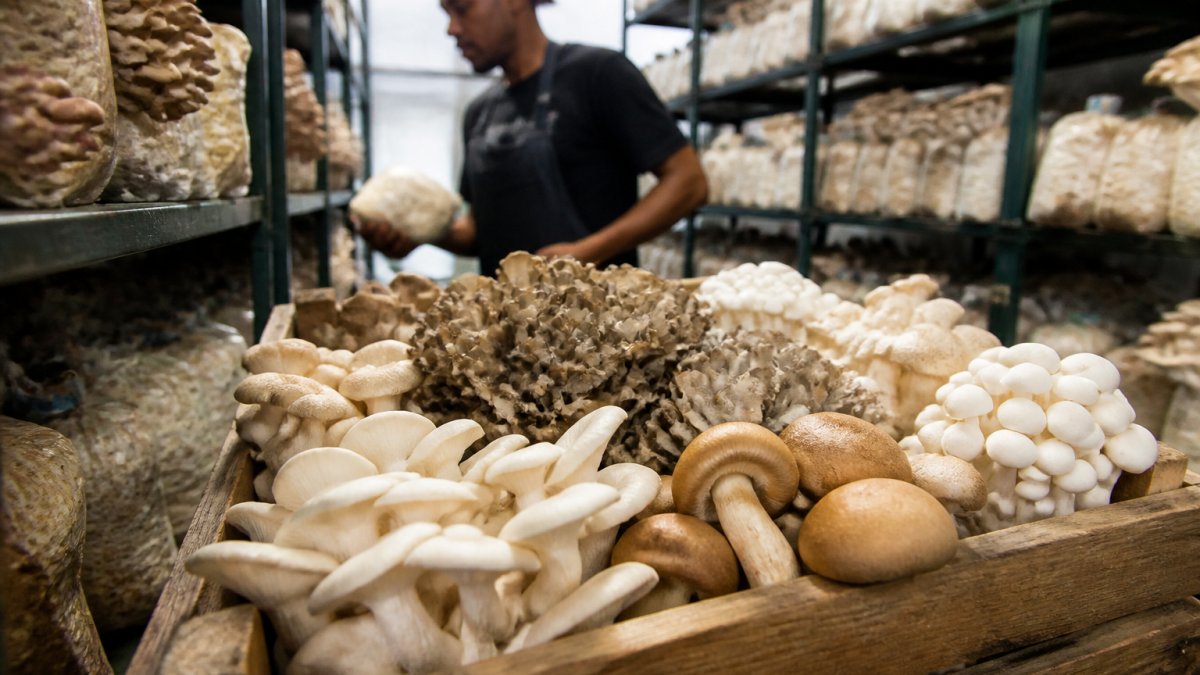
Mushroom Direct operates a Queens-based urban farm where customers can pick up fresh harvests several times per week. Our farm-to-kitchen model means mushrooms reach your door within hours of harvest, preserving the delicate flavor compounds that fade quickly after picking. We grow Lion's Mane, oyster varieties, shiitake, king trumpet, and chestnut mushrooms year-round, with seasonal foraged varieties available during peak months.

Direct farm pickup eliminates middlemen and storage delays. You see exactly where your food comes from and understand the growing practices behind it. Many farms offer tours or educational sessions so you can learn about cultivation methods and seasonal availability firsthand.
Shopping at Farmers' Markets with Mushrooms
Farmers' markets represent the second-best option for locally grown mushrooms near me after direct farm pickup. Markets operate on set schedules, typically weekly or twice weekly, and feature multiple vendors so you can compare varieties and prices in one location.
When shopping at farmers' markets, arrive early. The best selection disappears by mid-morning as popular vendors sell out. Ask vendors about harvest timing, growing methods, and storage recommendations. Farmers who grow their own mushrooms can answer specific questions about flavor profiles and cooking techniques.
Look for farmers' markets that verify vendor credentials. Some markets require vendors to grow or produce everything they sell within a specific radius, typically 100 miles. This certification guarantees true local sourcing rather than resold wholesale products.
| Market Type | Availability | Freshness | Selection | Price |
|---|---|---|---|---|
| Direct farm pickup | Scheduled hours | Peak (same day) | Limited to farm varieties | Competitive |
| Farmers' market | Weekly schedule | Excellent (1-3 days) | Multiple vendors | Moderate to high |
| Grocery stores (local partners) | Daily | Good (3-5 days) | Limited local section | Higher |
| Delivery services | Flexible ordering | Very good (next day) | Curated selection | Varies |
Mushroom Farm Delivery Options
Delivery services bring locally grown mushrooms directly to your kitchen, eliminating the need to travel. This convenience matters for busy home cooks and restaurant professionals who need consistent access without scheduling around market hours.
Mushroom Direct offers same-week delivery across New York City boroughs, Long Island, Hoboken, and Jersey City, with free next-day delivery on featured boxes. Our model works because we harvest in small batches and ship the same day, preserving the quality that makes fresh mushrooms worth seeking out.
When evaluating delivery services, confirm their sourcing radius and harvest timing. Services that partner with multiple local farms can offer better variety than single-farm operations. Ask about their handling and packaging methods, mushrooms bruise easily, so proper cushioning matters.
Subscription options provide consistency and often include discounts versus one-time orders. If you cook regularly with fresh mushrooms, a weekly or biweekly subscription ensures you never run out while supporting the farm's planning and harvest scheduling.
How to Choose Fresh Mushrooms
Selecting quality locally grown mushrooms requires understanding what to look for. Fresh mushrooms should feel firm, never soft or slimy. The caps should be intact without bruising or dark spots, and the gills underneath should be light-colored and tightly packed.
Smell is your second indicator. Fresh mushrooms have an earthy aroma without any sour or ammonia-like notes. If a mushroom smells off, don't buy it, that indicates bacterial growth or age.
Fresh Organic Maitake Mushrooms →
Different varieties have different characteristics. Oyster mushrooms have delicate, fan-shaped caps and should feel dry to the touch. Shiitake mushrooms have thicker, darker caps with a meaty texture. King trumpet mushrooms are dense and firm, almost like a vegetable rather than a delicate fungus. Chestnut mushrooms fall between button mushrooms and portobellos in size and color.

Ask the vendor when the mushrooms were harvested. Mushrooms picked that morning or the day before are ideal. Anything older than three days has begun losing moisture and flavor compounds. Reputable vendors volunteer this information without hesitation.
Verifying Freshness and Sourcing
Beyond appearance and smell, verify both the story behind your mushrooms and their current availability before making a trip. Legitimate local farms can tell you exactly where and how they grew their crop, and they can confirm what's in stock right now.
Check harvest dates and current inventory. Before visiting a farm or market, contact the vendor directly to ask when mushrooms were harvested and what varieties are available today. Mushrooms picked that morning or the day before are ideal; anything older than three days has begun losing moisture and flavor compounds. Reputable vendors volunteer this information without hesitation. Many farms now post harvest dates on their website or social media, updating daily or weekly as new batches are ready.
Understand market days and pickup windows. Farmers' markets operate on set schedules, and many farms limit pickup to specific days and times. Confirm the exact day and hours before you go. Some farms require advance orders placed 24 to 48 hours ahead, while others operate first-come, first-served. Knowing this prevents arriving to find your preferred varieties sold out or the farm closed.
Ask about growing practices and substrate. Mushrooms cultivated on organic agricultural by-products like legume hulls, straw, or brewers' spent grain indicate a sustainable operation. Farms using these substrates typically recycle the spent material into fertilizer or compost, minimizing waste. Ask the grower directly: "What do you grow these mushrooms on?" A clear answer shows transparency and knowledge.
Request information about food safety protocols. Professional farms follow documented handling procedures, maintain temperature control during storage and transport, and can explain their sanitation practices. Ask: "How do you store mushrooms before sale?" and "What's your process for handling and packaging?" Farms that can answer these questions confidently are managing food safety seriously.
Check for certifications if they matter to you. Some farms pursue organic certification through the USDA, though many small operations don't pursue formal certification despite meeting organic standards. If certification is important to you, ask directly: "Are you USDA certified organic?" rather than assuming. Some farms may be certified by third-party organizations like Food Alliance or Regenerative Organic Certified, which also indicate rigorous standards.
Assess traceability and record-keeping. Ask if the farm can tell you the specific batch or harvest date of the mushrooms you're buying. Farms that track this information can answer questions like "Were these grown in the same batch?" or "When exactly were these harvested?" This level of detail indicates professional operations that take food safety seriously.
Building Your Local Mushroom Supply
Establishing a reliable source for locally grown mushrooms takes a few weeks of exploration. Start by visiting your nearest farmers' market and speaking with vendors about their growing practices. Note their harvest schedules and typical availability.
Next, research direct farm options in your area. Many farms maintain websites or social media pages showing current inventory and pickup schedules. Call ahead to understand their ordering process, some require advance notice while others operate on first-come, first-served bases.
Consider your cooking frequency and storage capacity. If you cook with mushrooms multiple times per week, a subscription or regular farmers' market visits work well. If you cook occasionally, direct farm pickup on an as-needed basis prevents waste.
Build relationships with your sources. Regular customers often get first access to rare varieties, advance notice of special harvests, and recommendations for preparation methods. Farmers appreciate customers who understand the seasonal nature of mushrooms and plan accordingly.
For restaurant and professional use, Mushroom Direct provides wholesale ordering with consistent quality, hard-to-find specialty varieties, and flexible delivery schedules. We work with chefs who need reliable sourcing without compromising on freshness or flavor.
Finding locally grown mushrooms near me transforms your cooking. The flavor difference between same-day harvest and week-old supermarket mushrooms is dramatic, earthier, more complex, and more satisfying. Mushroom Direct delivers that difference to your kitchen with peak-freshness harvests of rare varieties you won't find at standard grocery stores. Order online for delivery across the New York area or pick up at our Queens farm. When you cook with mushrooms harvested hours before, you taste the difference immediately.
Frequently Asked Questions
Where can I find locally grown mushrooms near me?
Locally grown mushrooms are available through urban farms that deliver to your area, farmers' markets on weekends, and specialty grocery stores that source from regional producers. Search online for 'mushroom farm near me' or check your local farmers' market schedule. Many farms now offer online ordering with same-week or next-day delivery, making it easier to access fresh, locally grown varieties without leaving home.
How can I tell whether mushrooms are locally grown?
Ask the vendor directly about harvest date and growing location. Locally grown mushrooms will have been picked within days, not weeks. Check product labels for farm name and location. At farmers' markets, vendors can tell you exactly when mushrooms were harvested. For farm delivery services, the harvest-to-delivery timeline is typically listed, look for services that deliver within 24 hours of harvest for peak freshness.
What types of gourmet mushrooms can I buy fresh?
Fresh gourmet varieties available from local farms include oyster mushrooms (blue, grey, white), shiitake, lion's mane, king trumpet, chestnut, and maitake. Availability varies by season and farm. Specialty farms often carry rare or foraged varieties. Ask your local farm or farmers' market vendor what's in season, seasonal varieties are fresher and more flavorful than out-of-season imports.
How do I find a mushroom farm that delivers?
Search online for 'mushroom farm delivery' plus your region or city. Check if local farms have websites or social media pages listing delivery areas and ordering information. Many urban farms offer online ordering with next-day delivery to nearby neighborhoods. Read customer reviews to verify delivery reliability and freshness claims. Some farms offer subscription boxes for regular deliveries at discounted rates.