

How to Cook Lion's Mane Mushroom: A Chef's Guide
Table of Contents
- Why Lion’s Mane Deserves a Spot in Your Skillet
- How to Prepare Lion’s Mane Mushroom Before Cooking
- How to Sauté Lion’s Mane Mushroom for a Golden Crust
- How Long to Cook Lion’s Mane Mushroom: Timing by Method
- A Simple Lion’s Mane Mushroom Recipe: Garlic Butter Steak Bites
- Troubleshooting Soggy or Unevenly Cooked Mushrooms
- Fresh vs. Dried Lion’s Mane and Storage Tips
- Conclusion
- Frequently Asked Questions
Last Updated: October 8, 2026
Why Lion’s Mane Deserves a Spot in Your Skillet
Lion's mane mushroom is a shaggy, white, pom-pom-shaped fungus with a meaty texture that shreds like crab or pulls apart like pulled pork.

At Mushroom Direct, we grow lion's mane in small batches on our Queens farm and deliver it to kitchens across New York within hours of harvest. Freshness matters here more than with almost any other mushroom.
Below, we'll show you exactly how to cook lion's mane mushroom, from cleaning to a golden crust, with timing for every method.
How to Prepare Lion’s Mane Mushroom Before Cooking
Good preparation takes about five minutes and decides everything that follows. Lion's mane needs no peeling, no soaking, and no stem removal. You trim, you clean, you cut, and you cook.

Cleaning: Brush, Don't Soak
Never rinse lion's mane under running water. The mushroom is basically a dense sponge, and it will drink whatever you give it. Soaked lion's mane steams in the pan instead of browning.
Use a dry paper towel or a soft pastry brush to wipe away debris. For grit trapped in the "teeth," a quick flick with a damp cloth works. If a spot is truly dirty, wipe it with a barely damp towel and pat dry immediately.
Tearing vs. Slicing for the Right Texture
Hand-tearing gives you the steak-like, craggy pieces that sear best. Slicing gives you even, uniform rounds that cook at the same rate.
- Tear for steak bites, "crab" cakes, and anything where you want texture
- Slice 1/2-inch thick for even browning and sandwiches
- Avoid thin slices under 1/4 inch, which dry out before they brown
Tear from the base outward, following the natural grain. You'll get pieces that look like small steaks.
How to Sauté Lion’s Mane Mushroom for a Golden Crust
The best way to cook lion's mane is a hot skillet with butter or oil, and patience. Medium-high heat, a single layer, and no stirring for the first few minutes.
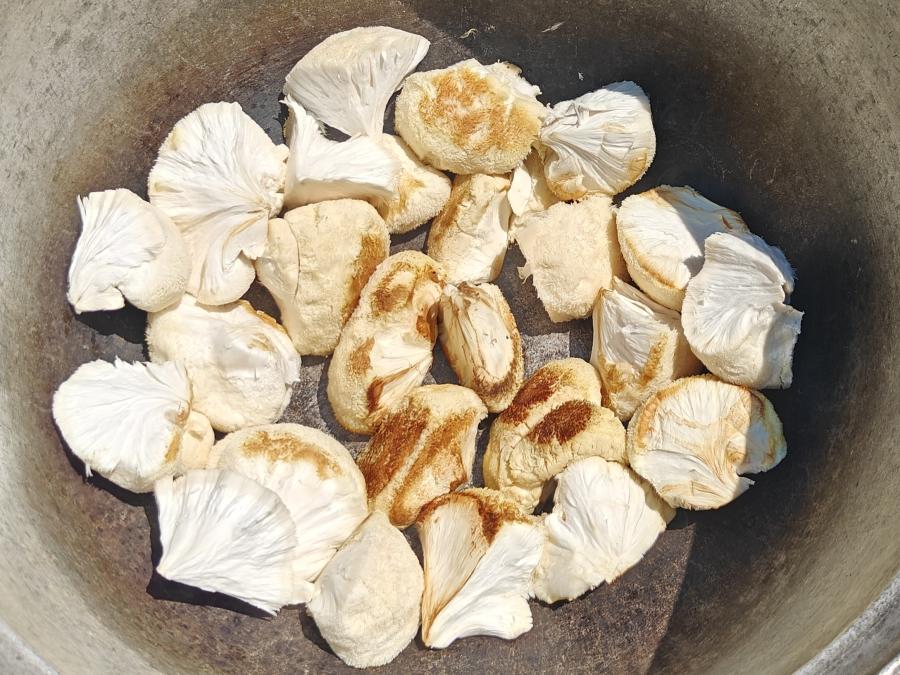
Here's the method we use:
- Heat a heavy skillet over medium-high for 2 minutes
- Add 2 tablespoons butter or oil and let it shimmer
- Lay pieces in a single layer, not touching
- Cook 4-5 minutes without moving them
- Flip and cook 3-4 minutes more
- Add minced garlic in the last minute
- Season with salt and pepper off the heat
Managing Moisture and Getting a Good Sear
Lion's mane releases water as it cooks. That's normal, but it's also the enemy of browning. Crowding the pan traps that water and steams the mushrooms instead of searing them.
Work in batches if you have more than one layer's worth. Let the released water evaporate before you flip. If the pan looks wet, turn the heat up slightly and wait. Once the water is gone, the browning starts fast.
How Long to Cook Lion’s Mane Mushroom: Timing by Method
Timing depends on three things: the method, the thickness of your pieces, and how dry the mushroom is going in. Below is a method-by-method comparison so you can pick the right one for the dish in front of you, plus the visual and tactile cues that tell you it's actually done, not just that the clock ran out.
Method |
Heat |
Time |
Texture Result |
Best For |
|---|---|---|---|---|
Sauté |
Medium-high |
7-9 min |
Crisp edges, tender center |
Steak bites, pasta, tacos |
Roast |
400°F |
20-25 min |
Chewy edges, meaty interior |
Salads, grain bowls, meal prep |
Grill |
High |
8-10 min |
Firm, smoky, steak-like |
Whole slabs, sandwiches |
Deep fry |
350°F |
2-3 min |
Shatter-crisp shell |
Tempura, nuggets, appetizers |
Air fry |
375°F |
10-12 min |
Crisp outside, moist inside |
Weeknight batches, less oil |
Doneness Cues, Not Just Clocks
A timer is a starting point. The mushroom tells you when it's ready:
- Sauté: edges are deep golden brown, pieces feel lighter when you lift them with tongs, and the pan sounds dry rather than sizzling-wet.
- Roast: edges curl and darken, centers spring back when pressed, and any liquid on the sheet pan has evaporated.
- Grill: clear grill marks, surface feels firm, and the slab releases easily from the grates without sticking.
- Deep fry: batter is uniformly golden and the pieces float; internal texture is custardy, not raw-firm.
- Air fry: exterior is dry to the touch and browned at the tips; shake the basket once at the halfway mark.
How Thickness Changes Everything
A 1/2-inch slice and a 1-inch slab cook very differently at the same heat. As a rule of thumb, add roughly 2 minutes of cook time per extra 1/4 inch of thickness for pan and oven methods. Thin pieces under 1/4 inch will dry out before they brown, so keep them out of high-heat methods and save them for soups or fillings.
Choosing a Method in 10 Seconds
- Want the fastest crust? Sauté.
- Want hands-off cooking? Roast.
- Want the most steak-like presentation? Grill a whole slab.
- Want a party appetizer? Deep fry in batter.
- Want crisp with less oil and less cleanup? Air fry.
Roasting, Grilling, and Deep Frying
Roasting gives you hands-off cooking.
Grilling works best with thick, whole slabs. Brush with oil, grill over high heat 4-5 minutes per side, and finish with a brush of butter.
Deep frying is the move for tempura-style nuggets. Dip pieces in batter and fry at 350 degrees for 2-3 minutes until golden.
Air frying is the low-oil shortcut. Toss pieces with a tablespoon of oil, arrange in a single layer in the basket, and cook at 375 degrees for 10-12 minutes, shaking once.
A Simple Lion’s Mane Mushroom Recipe: Garlic Butter Steak Bites
This is the recipe our customers ask for most. It takes 15 minutes and needs one pan.
Ingredients:
- 1 lb Lion's Mane Mushrooms
- 3 tbsp butter or olive oil
- 3 cloves garlic, minced
- 1 tbsp fresh lemon juice
- Salt and pepper to taste
- Fresh parsley or thyme
Instructions:
- Tear lion's mane into thick, steak-like pieces
- Heat butter in a skillet over medium-high heat
- Cook mushrooms 4-5 minutes per side until golden and crispy
- Add garlic and cook 1 minute until fragrant
- Drizzle with lemon, season, and garnish
Serve over rice, pasta, or a bed of greens. The texture holds up to a heavy sauce, so black garlic, miso, or a beetroot puree all work.
Troubleshooting Soggy or Unevenly Cooked Mushrooms
Soggy result? Your pan was crowded or your heat was too low.
Uneven browning? Your pieces were different sizes. Tear or slice them uniformly, roughly 1/2-inch thick.
Rubbery texture? You cooked too fast on too high heat, or you moved the pieces too often. Let them sit.
Bitter edges? The garlic burned. Add it in the last minute, off the direct heat if needed.
Fresh vs. Dried Lion’s Mane and Storage Tips
Most guides stop at "use fresh for texture, dried for tea." That's true but incomplete. Here's what actually changes when you cook with each, plus the storage and safety details that keep you from wasting a good mushroom.
Fresh Lion's Mane: What to Look For
A good fresh lion's mane is white to cream-colored, firm to the touch, and smells mildly earthy, not sour or fishy. Avoid mushrooms that are yellowing, slimy, or leaking liquid; those are past their prime.
Store fresh lion's mane in a paper bag in the main compartment of the fridge, never sealed plastic. The paper lets excess moisture escape while keeping humidity around the mushroom. Use within 5-7 days for best texture.
Dried Lion's Mane: Rehydration and Cooking Differences
Dried lion's mane is concentrated in flavor but loses its steak-like chew. It's best for broths, teas, powders, and sauces where texture isn't the point.
To rehydrate:
- Place dried pieces in a bowl and cover with warm (not boiling) water, roughly 2 cups of water per 1 ounce of dried mushroom.
- Soak 20-30 minutes until pliable. Thicker pieces may need 45 minutes.
- Lift the mushrooms out and squeeze gently. Save the soaking liquid, it's flavorful and makes an excellent base for soup or risotto.
- Strain the liquid through a fine-mesh sieve or coffee filter to remove any grit before using.
Once rehydrated, dried lion's mane cooks faster than fresh because the cell structure is already broken down. Reduce sauté times by about a third and expect a softer, less crisp result. It won't brown the same way fresh does, so use it in wet applications rather than dry-heat searing.
Leftovers and Food Safety
Cooked lion's mane keeps in the fridge for 3-4 days in a sealed container. Reheat in a hot skillet to bring back some crispness, the microwave will steam it soft. For food safety, refrigerate leftovers within 2 hours of cooking.
Signs to toss, not taste: slimy texture, sour or ammonia-like smell, visible mold, or liquid pooling in the container. When in doubt, throw it out.
Freezing: A Third Option
If you have more than you can use in a week, freeze it. Cooked lion's mane freezes well for up to 3 months, spread pieces on a sheet pan, freeze until solid, then transfer to a freezer bag. Raw lion's mane freezes poorly because the high water content turns it mushy on thaw. Cook first, freeze second.
Fresh mushrooms from Mushroom Direct arrive within hours of harvest, which means firmer texture and longer fridge life than supermarket stock. Dried lion's mane, like our Dried Lion's Mane Mushroom, comes in a resealable 1 oz package, roughly 8-10 cups of rehydrated mushroom, enough for several batches of broth or a week of tea.
Conclusion
Cooking lion's mane well isn't complicated, but it does reward attention. Dry the surface, heat the pan properly, don't crowd it, and let it brown before you touch it. Do those four things and you'll get a crust that rivals any steak.
If you want mushrooms that arrive fresh enough to sear properly, Mushroom Direct harvests in small batches and delivers across New York with free next-day delivery on featured boxes.
Add to cart and cook with it tomorrow.
Frequently Asked Questions
How do you prepare lion's mane to eat?
Start by brushing off any dirt with a damp paper towel. Never soak it. Tear or slice the mushroom into thick, steak-like pieces. Heat a skillet over medium-high heat with butter or oil, then cook the pieces for 4-5 minutes per side until golden brown. Season with salt and pepper. This method keeps the texture meaty and prevents sogginess.
Is it better to eat lion mane raw or cooked?
Cooking is the better choice for both flavor and texture. Raw lion's mane has a tough, spongy consistency and a mild, earthy taste that many find unpleasant. Cooking breaks down the fibers, creating a meaty, steak-like texture with a rich, savory flavor. Sautéing, roasting, or grilling also helps release moisture and develop a crispy exterior.
How can you keep lion's mane mushrooms from getting soggy?
The key is to avoid overcrowding the pan and to use enough heat. Cook in a single layer over medium-high heat so moisture evaporates instead of steaming the mushrooms. Don't wash them with water; brush them clean. Tear them into thick pieces rather than thin slices, and pat them dry before cooking. A hot, uncrowded pan gives you a golden crust.
What is the best way to cook lion's mane mushrooms?
Sautéing in a skillet with butter or oil over medium-high heat is the most popular method for home cooks. It takes about 4-5 minutes per side and gives you a crispy, golden exterior with a tender inside. Roasting at 400 degrees for 15-20 minutes or grilling also works well. For a lighter option, deep frying in tempura batter creates a crunchy finish.