

Restaurant Quality Mushrooms for Home
Table of Contents
- What Makes Restaurant Quality Mushrooms Different
- Best Mushrooms for Sautéing
- How to Sauté Mushrooms Like a Professional
- How Long to Cook Mushrooms for Deep Browning
- How to Keep Mushrooms from Getting Soggy
- Flavor Builders: Oil, Butter, and Aromatics
- Achieving Restaurant Quality Mushrooms at Home
- Frequently Asked Questions
Last Updated: October 16, 2026
What Makes Restaurant Quality Mushrooms Different
Restaurant quality mushrooms stand out because of how they're grown, harvested, and handled before they reach your kitchen. The difference between a supermarket mushroom and a truly fresh one is dramatic, it's the gap between soggy and meaty, bland and deeply savory.
Professional chefs obsess over freshness for one reason: it changes everything.
The key differences come down to three things: variety selection, harvest timing, and storage. When you buy from a supermarket, those mushrooms may have been harvested days ago, warehoused, and distributed through multiple stops. By the time they reach your pan, they've already begun breaking down.
Restaurant chefs also choose specific varieties for specific dishes. They don't just grab whatever's available. King Trumpet mushrooms develop a scallop-like crust when seared. Oyster mushrooms stay tender with a delicate texture. Lion's Mane has a subtle seafood note and holds its shape through longer cooking. Understanding these differences transforms your cooking.

Best Mushrooms for Sautéing
Not all mushrooms behave the same way in a hot pan. Some collapse into mush. Others stay firm and develop that deep, caramelized crust. The best mushrooms for sautéing have firm flesh and enough moisture to brown without releasing water too quickly.
Cremini, White Button, and Portobello
These are the foundation mushrooms. White buttons are mild and reliable. Cremini are slightly earthier with a firmer texture. Portobello are cremini's larger cousins, meaty and substantial.
White buttons are forgiving for beginners. They brown reliably and work in almost any dish. The downside: they're mild. If you want bold flavor, they're not the best choice.
Cremini mushrooms deliver more umami punch. They brown faster than white buttons and hold their shape well. Use them when you want visible browning and deeper flavor.
Portobello mushrooms are the showstoppers. Slice them thick, sear them hard, and they develop a crust like a steak. The large surface area caramelizes beautifully. They're dense enough to handle aggressive heat without falling apart.
King Trumpet and Oyster Varieties
King Trumpet mushrooms (also called King Oyster) are the secret weapon. They have a firm, meaty texture that stays intact through high heat. When you slice them into thick rounds and sear them, they develop a golden crust that resembles scallops. This is the mushroom that makes home cooks look like professionals.
Oyster mushrooms come in several varieties. Grey Oyster, Golden Oyster, and Mediterranean Oyster all have delicate, slightly chewy texture and a subtle anise-like flavor. They're tender but don't collapse if you don't overcrowd the pan. White Oyster mushrooms are milder and work well in stir-fries and creamy dishes.
The texture of oyster mushrooms is their strength. They hold together beautifully during cooking. The flavor is more delicate than cremini, so they pair well with aromatics like garlic, thyme, and shallot.
Specialty Varieties: Lion's Mane and Shiitake
Lion's Mane mushrooms have a unique texture, almost seafood-like, slightly chewy. They're prized by chefs for their ability to absorb flavors while maintaining structure. When sautéed with butter and garlic, they develop a rich, savory depth.
Shiitake mushrooms are earthy and strong. They have a firmer cap and a stronger flavor than most oyster varieties. They brown well and stand up to bold seasonings. Shiitake work beautifully in Asian-inspired dishes and with red wine reductions.
Both of these specialty varieties benefit from peak freshness. The fresher the mushroom, the better the texture and flavor development. Mushroom Direct's gourmet medley boxes rotate through specialty varieties, giving you access to these premium options without committing to a full case.

How to Sauté Mushrooms Like a Professional
Professional technique comes down to five things: prep, sizing, pan choice, heat management, and timing. Master these and your mushrooms will rival any restaurant dish.
Prep and Cleaning
Start with clean mushrooms. Don't soak them, mushrooms absorb water like a sponge and you'll end up with soggy results. Instead, use a damp cloth or soft brush to gently wipe away dirt. For stubborn soil, a quick rinse under running water works, but pat them dry immediately with paper towels.
The goal is clean mushrooms with a dry surface. Moisture on the outside interferes with browning. Wet mushrooms steam instead of sear.
Slicing and Sizing
Size matters more than most guides acknowledge. Thin slices cook too fast and can dry out. Thick chunks don't brown evenly. The sweet spot is usually 1/4 inch to 1/2 inch thick.
For cremini and white buttons, slice them vertically through the cap and stem. This keeps the structure intact. For portobello, slice into thick strips or quarters. For King Trumpet, cut into rounds about 1/2 inch thick, this is where they develop that scallop-like crust.
Oyster mushrooms naturally separate into clusters. Keep small clusters together and tear larger ones into manageable pieces. Lion's Mane shreds naturally, so slice it into 1/4-inch thick pieces to maintain structure.

The key principle: consistent sizing. If some pieces are thin and others thick, the thin ones burn while the thick ones stay pale. Uniformity guarantees even browning.
Pan Selection and Heat Management
Use a stainless steel skillet or cast iron. These materials conduct heat evenly and develop that caramelized crust. Non-stick pans are convenient but don't brown as effectively.
A 10-inch to 12-inch skillet is ideal for home cooking. Larger pans cool down too much when you add cold mushrooms. Smaller pans force you to overcrowd, which prevents browning.
Heat the pan before adding mushrooms. Set it to medium-high heat. Wait 2-3 minutes until a drop of water forms a bead and rolls across the surface.
The temperature is critical. Too low and mushrooms release water instead of browning. Too high and the outside burns before the inside cooks. Medium-high is the professional standard.
How Long to Cook Mushrooms for Deep Browning
Most home cooks undercook mushrooms. They're afraid of burning them or making them tough. The opposite is true: mushrooms need time and heat to develop flavor.
The cooking time depends on thickness and variety. Thin slices (1/4 inch) take 4-6 minutes total. Thick slices or rounds (1/2 inch) take 8-12 minutes. The signal isn't time, it's color.
Fresh Gourmet Medley Box | Free Next Day Delivery →
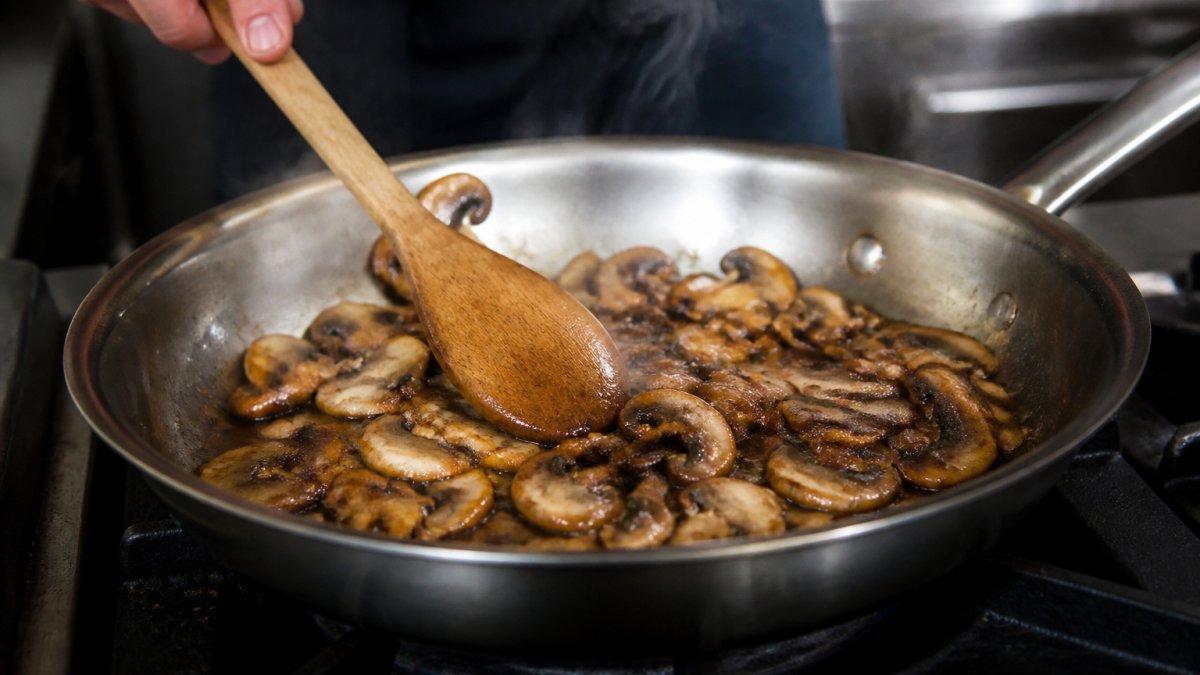
Look for deep golden-brown spots on the surface. These are the result of the Maillard reaction, the chemical process that creates savory, complex flavor. Without browning, mushrooms taste watery and mild.
Here's the professional approach: add mushrooms to the hot pan in a single layer. Don't stir for the first 3-4 minutes. This allows direct contact with the hot surface, which creates browning.
For King Trumpet rounds, you'll see a golden crust form. For oyster mushrooms, the edges will darken and curl slightly. For cremini, the caps will shift from light tan to rich brown.
How to Keep Mushrooms from Getting Soggy
This is where most home cooks fail.
The problem is moisture. Mushrooms are 85-90% water. When you apply heat, that water needs to escape.
Here's how professionals handle it:
Don't overcrowd the pan. A single layer of mushrooms is non-negotiable. If you need to cook more, work in batches. Overcrowding drops the pan temperature and traps steam. Mushrooms release water that can't evaporate, creating a soggy mess.
Use enough fat. Oil or butter helps mushrooms brown instead of steam. The fat also helps the pan stay hot when you add cold mushrooms.
Don't add salt early. Salt draws moisture out of mushrooms. Add it after the mushrooms are browned, not before.
Keep the pan hot. If the temperature drops, mushrooms release water instead of browning. Medium-high heat throughout cooking is the standard.
Don't cover the pan. A lid traps steam, which is the enemy of browning. Leave the pan uncovered the entire time.
Let liquid evaporate. If mushrooms release liquid during cooking, don't panic. Keep the heat high and let the liquid evaporate. Once it's gone, browning resumes.
| Problem | Cause | Fix |
|---|---|---|
| Mushrooms release watery liquid | Overcrowding or low heat | Single layer, medium-high heat |
| Pale, steamed appearance | Too much moisture trapped | Leave pan uncovered, let liquid evaporate |
| Soggy texture after cooking | Salt added too early | Salt after browning is complete |
| Mushrooms stick to pan | Not enough fat | Use 2 tablespoons fat per pound |
Flavor Builders: Oil, Butter, and Aromatics
The fat you choose and the aromatics you add determine the final flavor profile. This is where technique becomes art.
Oil versus butter: Olive oil has a lower smoke point, so it's better for medium-heat cooking and finishing.
Garlic and shallot: Add these after the mushrooms are browned. If you add them at the start, they'll burn before the mushrooms finish cooking.
Fresh herbs: Thyme, rosemary, and parsley work beautifully. Add them in the final minute of cooking.
Worcestershire sauce or soy sauce: A splash of umami-forward liquid deepens the savory notes. Add 1-2 teaspoons near the end of cooking.
Red wine or beef stock: For a more complex dish, deglaze the pan with wine or stock after the mushrooms are browned.
The order matters. Mushrooms first, browning. Aromatics second, after browning. Liquids and herbs last. This sequence ensures every element reaches its peak flavor without burning.
Achieving Restaurant Quality Mushrooms at Home
The gap between home-cooked and restaurant-quality mushrooms is smaller than you think. It comes down to three things: start with fresh mushrooms, use proper technique, and don't rush.
Fresh mushrooms are the foundation. A supermarket mushroom that's been sitting for days will never perform like one picked hours before cooking. This is why Mushroom Direct's farm-to-table model matters.
Technique is learnable. The steps are straightforward: hot pan, single layer, no stirring for the first few minutes, deep browning, aromatics added late. These aren't secrets, they're just the steps that work.
Timing is the final piece. Mushrooms need 8-12 minutes for proper browning. Rushing this step is the most common mistake. The Maillard reaction that creates restaurant-quality flavor takes time (pubmed.ncbi.nlm.nih.gov).
When you combine fresh mushrooms with proper technique, the results rival any restaurant dish. The mushrooms taste meaty and savory. The texture is tender but structured. The browning is deep and complex.
Getting restaurant quality mushrooms at home starts with the ingredient itself. Our Fresh Gourmet Medley Box includes rotating varieties like King Trumpet, Lion's Mane, and oyster mushrooms, the same premium selections professional chefs rely on. Start with Mushroom Direct's Fresh Gourmet Medley Box and experience the difference freshness makes.
Frequently Asked Questions
What kind of mushrooms do most restaurants use?
Most restaurants rely on cremini, portobello, and white button mushrooms for everyday sautéed dishes because they brown reliably and have a meaty texture. For steakhouse-style preparation, King Trumpet and oyster varieties are popular due to their firm texture and ability to develop a golden crust. Premium restaurants also feature specialty varieties like shiitake and Lion's Mane for unique umami depth and visual appeal.
How do you keep sautéed mushrooms from getting soggy?
The key is moisture management: clean mushrooms without soaking, cut them into uniform pieces so they cook evenly, use a hot pan and don't overcrowd it, and avoid adding liquid until mushrooms have released and reabsorbed their own moisture. Cook in batches if needed, and add butter or oil only after the initial moisture has evaporated. This prevents steaming and ensures a tender, caramelized finish instead of a soggy texture.
How long should you cook mushrooms for a restaurant-style finish?
Most mushrooms take 8-12 minutes total to achieve deep browning and caramelization. Start with 5-7 minutes undisturbed to allow the cut surface to brown, then stir and cook another 3-5 minutes until tender and deeply golden. Larger pieces like King Trumpet rounds may need up to 15 minutes. The exact time depends on pan heat, mushroom size, and moisture content, stop when the edges are dark brown and the mushroom is tender but not shriveled.
Should you wash mushrooms before sautéing them?
Yes, but gently. Rinse mushrooms quickly under cool running water or wipe them with a damp cloth to remove soil. Avoid soaking, as mushrooms absorb water easily. Pat them dry thoroughly with paper towels before cooking, excess moisture prevents browning and leads to steaming instead of sautéing. Clean, dry mushrooms are essential for achieving the golden, caramelized crust that defines restaurant-quality results.