

7 Reasons Fresh Mushrooms Taste Better Than Old Ones
Quick Summary
Fresh mushrooms taste better because they are still alive when you buy them, and their flavor compounds have not broken down yet. Most of their savory, earthy taste comes from umami compounds that fade as the mushroom ages. Shorter travel time from harvest to plate means less of that flavor is lost.
- Once picked, mushrooms keep using stored sugars and moisture, and the flavor turns flat as cells break down.
- Firm caps, clean gills and a clean earthy smell show a mushroom is still fresh.
- Store mushrooms in a paper bag or a container with air holes in the coldest part of the refrigerator, and do not wash them until cooking.
- Cook in a single layer in a hot pan without stirring for 3 to 4 minutes so they brown instead of steaming.
- Add salt near the end of cooking, because salting early draws out moisture and slows browning.
Table of Contents
- Why Fresh Mushrooms Have More Flavor Than Older Ones
- Fresh Versus Canned and Dried Mushrooms: What Changes
- How to Tell If Mushrooms Are Fresh at the Store
- How to Store Fresh Mushrooms So They Keep Their Flavor
- How Long Do Fresh Mushrooms Last and When to Toss Them
- How to Cook Mushrooms for Best Flavor at Home
- Start Your Next Batch With a Fresh Mushroom Box
- Frequently Asked Questions
Why Fresh Mushrooms Have More Flavor Than Older Ones
Fresh mushrooms taste better because they are still alive when you buy them, and their flavor compounds have not broken down yet. Most of the savory, earthy taste comes from umami compounds that fade as the mushroom ages. Mushrooms that travel a shorter distance from harvest to plate spend less time losing that flavor.
Here is what happens over time. Once a mushroom is picked, it keeps using its stored sugars and moisture. The cells slowly break down, and the flavor turns flat. The texture changes too, going from firm and meaty to soft and slimy.
A few things make a big difference:
- Less time between harvest and plate keeps the umami flavor strong.
- Firm caps and clean gills show the mushroom still has its moisture.
- Fewer days in storage means less loss of sugars and flavor compounds.
Fresh Versus Canned and Dried Mushrooms: What Changes
Canned and dried mushrooms are useful pantry tools, but they are not interchangeable with fresh ones. The differences come down to how each process changes water content, cell structure, and flavor compounds.
Canned mushrooms are cooked in the can. The heat and liquid soften cell walls, so the texture turns uniformly soft and the earthy notes flatten. They also pick up a faint metallic or briny taste from the packing liquid. Canned mushrooms are best drained and patted dry before use; otherwise the extra liquid steams whatever you add them to. Use them in soups, stews, and casseroles where their softer texture is an asset rather than a flaw.
Dried mushrooms lose most of their water, which concentrates the savory compounds and creates intense, sometimes smoky notes. That concentration is why a small handful of dried porcini or shiitake can flavor a whole pot of stock. The trade-off is texture: drying makes them chewy and leathery, and they never regain the juicy bite of a fresh mushroom. Rehydrate them in warm water for 20 to 30 minutes, then strain the soaking liquid through a fine-mesh sieve or coffee filter to remove grit; that liquid is a free flavor boost for sauces and risotto.
Fresh mushrooms give you the most control because they still contain their natural moisture and intact cell structure. In a hot pan they release water first, then brown once that water evaporates. That browning step is where the deep, savory flavor develops, and it is hard to reproduce with canned or dried mushrooms. Fresh mushrooms also hold their shape, so they work as a main component rather than just a flavoring.
A practical rule: if mushrooms are the star of the plate, use fresh. If you need a shelf-stable backup or a concentrated flavor base, keep dried on hand.
How to Tell If Mushrooms Are Fresh at the Store
Checking mushrooms before you buy saves a lot of disappointment at home. Use your eyes, your fingers, and your nose. A good mushroom looks and feels like it was picked recently.
Visual and Texture Checks
Look for these signs of freshness:
- Caps that are firm, dry, and evenly colored
- Gills that are tight and not dark or slimy
- No dark spots, bruises, or soft patches
- Stems that are firm and attached well to the cap
If the cap looks shriveled or the surface looks wet and sticky, pass on that pack. Those are signs the mushroom is past its best.
Smell and Moisture Checks
Fresh mushrooms smell clean and earthy. A sour, sharp, or ammonia-like smell means the mushroom has started to spoil. Also watch for moisture inside the container. A little condensation is normal, but pools of liquid or a slimy film are warning signs. Those signs usually mean the mushrooms have been sitting too long or stored too warm.
How to Store Fresh Mushrooms So They Keep Their Flavor
Good storage keeps mushrooms firm and flavorful for longer. The main goal is to keep them dry and cool, not wet and sealed.
Follow these steps:
- Keep mushrooms in a paper bag or a container with air holes.
- Store them in the coldest part of the refrigerator, usually near the back.
- Do not wash them until you are ready to cook.
- Wipe off dirt with a damp paper towel or a soft brush.
Plastic bags trap moisture, and that moisture speeds up spoilage. A paper bag lets the mushrooms breathe while still holding in enough humidity to keep them from drying out.
Fresh Gourmet Medley Box | Free Next Day Delivery →
How Long Do Fresh Mushrooms Last and When to Toss Them
Fresh mushrooms are best eaten soon after purchase, and their flavor and texture soften the longer they are kept.
Toss mushrooms when you see any of these signs:
- Slimy or sticky surfaces
- Dark, soft, or mushy spots
- A sour or strong unpleasant smell
- Visible mold
Do not try to save a mushroom that smells off.
How to Cook Mushrooms for Best Flavor at Home
Restaurant mushrooms taste rich because the cook controls moisture, uses high heat, and gives the mushrooms enough space to brown. You can reproduce that at home with a repeatable method.
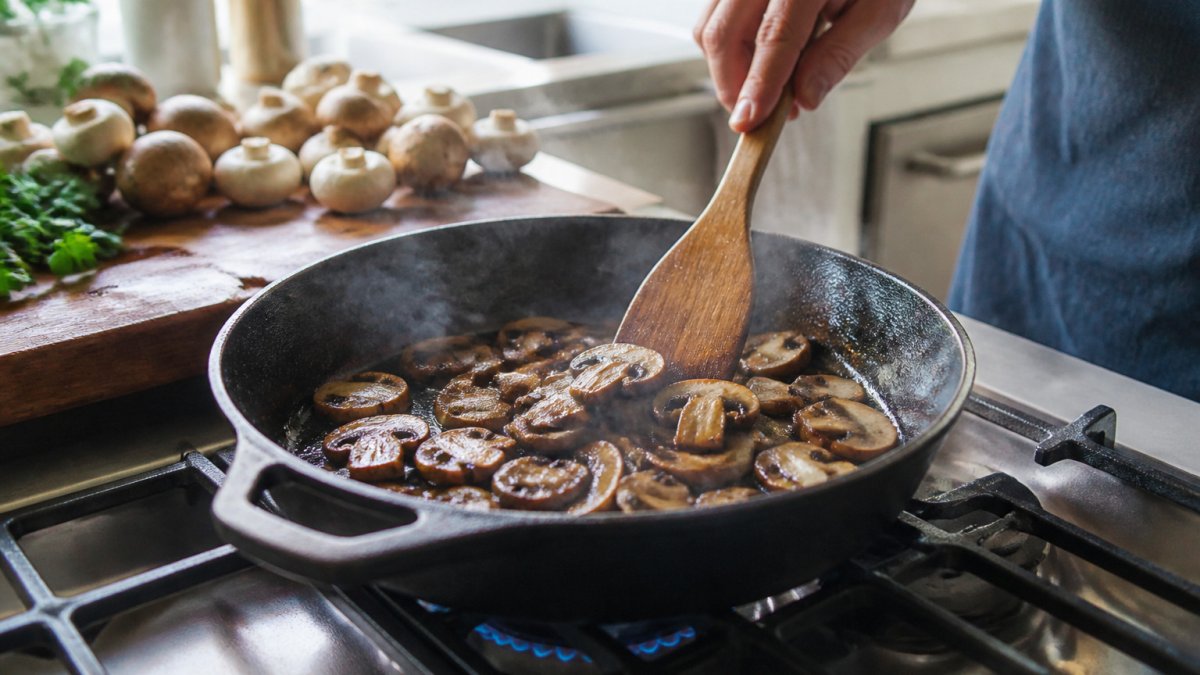
Choose the right pan. A wide, heavy skillet or stainless-steel pan works best because it holds heat and gives mushrooms room to spread out. Nonstick is convenient but browns less aggressively. Cast iron works well if you preheat it properly.
Prep correctly. Wipe mushrooms with a damp paper towel or soft brush instead of soaking them. If you must rinse, do it quickly and dry them thoroughly; surface water has to evaporate before browning can start. Trim only the tough base of the stem. Slice thick varieties like king oyster into 1/2-inch planks and leave small varieties whole.
Control the batch size. Spread mushrooms in a single layer with a little space between them. A common mistake is crowding the pan, which traps steam and turns the mushrooms soft and gray instead of browned. For a 12-inch skillet, cook about 8 to 10 ounces at a time. Cook in batches if needed; the extra minutes are worth it.
Use the right heat and timing. Preheat the pan over medium-high heat for 1 to 2 minutes. Add a thin film of oil with a high smoke point, such as canola or grapeseed, and wait until it shimmers. Add the mushrooms and let them sit without stirring for 3 to 4 minutes. They will release water first; that is normal. Once the water evaporates and the edges start to brown, flip or stir and cook another 2 to 3 minutes.
Know the doneness cues. The mushrooms are ready when they are deeply golden at the edges, reduced in volume by about half, and squeaky-tender when you bite one. If they are still releasing liquid, keep cooking; if they start to stick and scorch, lower the heat slightly.
Season at the right moment. Add salt near the end of cooking. Salting early draws out moisture and can slow browning. Finish with a pat of butter, a splash of soy sauce, or minced garlic and cook 30 seconds more to bloom the aromatics.
Match the method to the mushroom. Oyster mushrooms are delicate and cook quickly; sauté them over medium-high heat for 3 to 4 minutes total. King oyster slices benefit from a hard sear in a dry pan first, then a little fat. Lion's mane browns best when pressed gently with a spatula to maximize contact. Chestnut and cremini are all-purpose and work with any high-heat method.
| Mushroom Type | Best Cooking Method | Flavor Note |
|---|---|---|
| Oyster | Sauté or stir-fry | Mild and tender |
| King Oyster | Sear in slices | Meaty and firm |
| Lion's Mane | Pan-sear or roast | Seafood-like texture |
| Chestnut | Roast or sauté | Nutty and earthy |
Start Your Next Batch With a Fresh Mushroom Box
Now that you know what fresh mushrooms should look and taste like, the easiest step is to order a batch you can trust. The Fresh Gourmet Medley Box gives you a rotating mix of gourmet varieties, with free next-day delivery on the 3 lb box. If you cook for a restaurant or want more variety, the Fresh Mixed Gourmet Mushrooms - Chef Variety Pack is available at $65.00. You can also order fresh gourmet mushrooms online for delivery.


Frequently Asked Questions
How can you tell if mushrooms are fresh?
Fresh mushrooms have firm, dry caps with smooth surfaces and no slime, dark spots or wrinkling. Gills or pores should look clean and not darkened. Give them a sniff: they should smell mild and earthy, and a sour or ammonia-like odor means they are past their best. Avoid packages with pooled liquid, since trapped moisture speeds spoilage and makes browning harder when you cook them.
Do fresh mushrooms taste better than canned mushrooms?
Yes, for most cooking. Canned mushrooms are cooked and packed in liquid, which softens their texture and dulls the savory, meaty flavor that comes from browning. Fresh mushrooms hold their structure and brown well in a hot pan, concentrating their flavor. Canned mushrooms work fine in casseroles and sauces where texture matters less, but fresh mushrooms are the better choice for sautés, roasting and grilling.
How should fresh mushrooms be stored to preserve their flavor?
Store fresh mushrooms in a paper bag or a container lined with paper towels in the coldest part of the refrigerator. Paper absorbs excess moisture that would otherwise cause slime. Do not wash them before storing, and brush off dirt just before cooking. Plastic wrap traps moisture and speeds decay, so avoid sealing them tightly.
What is the best way to cook mushrooms to bring out their flavor?
Use a hot, dry pan with a small amount of oil or butter, and avoid crowding the mushrooms. Crowding traps steam and prevents browning. Cook them undisturbed until the bottoms are deep golden, then flip and brown the other side. Add salt near the end of cooking, since salt draws out moisture. Once they are browned, add garlic or herbs for a finish that enhances the savory base.
