

How to Grow Mushrooms at Home: Beginner's Guide
Table of Contents
- Why Growing Mushrooms at Home Is Easier Than You Think
- The Best Mushroom Grow Kit for Beginners
- How to Care for a Mushroom Grow Kit
- How to Grow Oyster Mushrooms at Home
- How Long Do Mushrooms Take to Grow?
- Common Mistakes and Contamination Prevention
- Harvesting, Flushes, and What to Expect
- Frequently Asked Questions
Last Updated: October 8, 2026
Why Growing Mushrooms at Home Is Easier Than You Think
Learning how to grow mushrooms at home is simpler than most people expect, and anyone can grow mushrooms with the right kit.
Mushroom cultivation means growing fungi on a prepared medium, called substrate, under controlled conditions.
That is the whole trick. Most new growers fail because they start from spores, which take weeks to colonize and invite contamination.
Below, we walk through setup, daily care, timing, and the mistakes that kill most first attempts.
The Best Mushroom Grow Kit for Beginners
The best mushroom grow kit for beginners is a pre-colonized block of oyster mushrooms, because oysters grow fast, tolerate imperfect conditions, and fruit reliably on a kitchen counter.
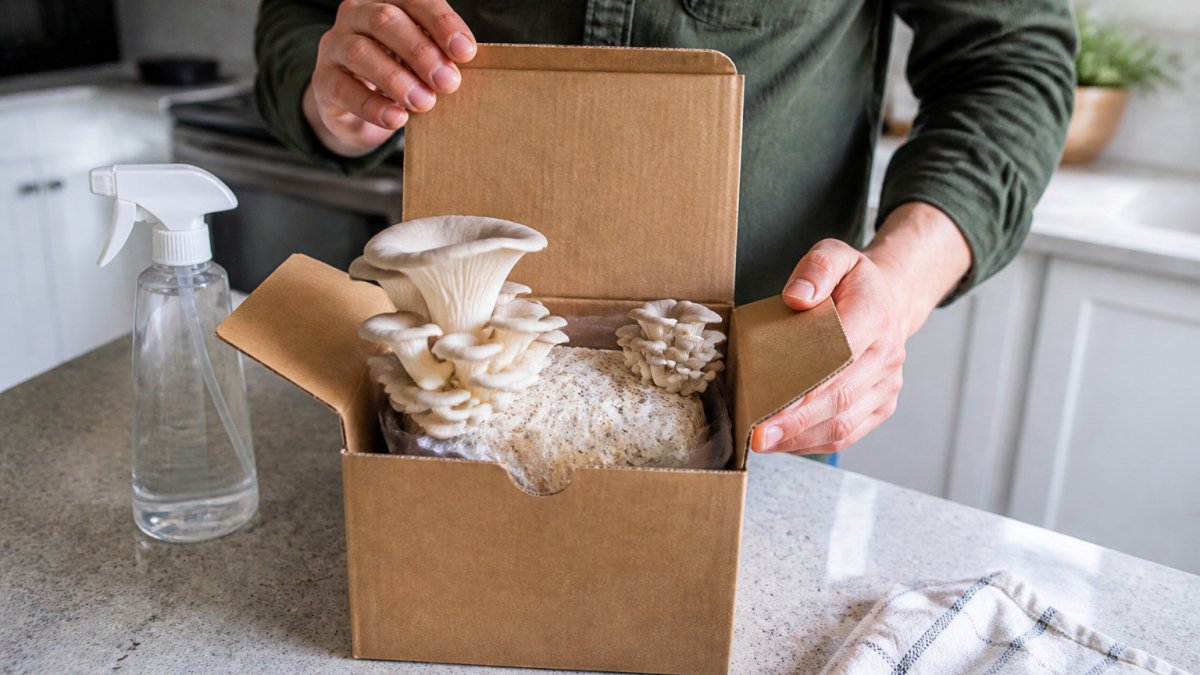
What Comes in a Beginner Grow Kit
A typical beginner kit contains four things:
- A block of substrate already colonized by mushroom spawn
- A container or bag with holes or a filter patch for air exchange
- Simple instructions for humidity and light
- Sometimes a mister or a small humidity tent
Some kits ship as a bucket or tray; others as a sealed bag you cut open. The format matters less than the spawn quality inside.
Setting Up Your Kit: First Steps
Setup takes about ten minutes.
- Unbox the kit and read the included instructions
- Find a spot away from direct sun and heating vents
- Cut or open the bag exactly as the instructions show
- Place the block in its container or humidity tent
- Mist lightly and wait
Do not soak the block on day one. Most kits arrive at the right moisture level, and overwatering ruins them fastest.
How to Care for a Mushroom Grow Kit
Caring for a mushroom grow kit comes down to three daily habits: mist, ventilate, and leave it alone.
Daily Humidity and Fresh Air Routine
Mushrooms need high humidity and steady air circulation. Dry air causes pins, the tiny mushroom beginnings, to abort before they develop.
A simple routine works well:
- Mist the block and the inside of the tent once or twice a day
- Fan or open the tent for a minute to refresh the air
- Keep the block off bare counters if the surface stays wet
- Never let water pool on the substrate
If the block looks shiny and damp, skip a misting. If it looks dry and the caps are cracking, mist more.
Light and Temperature for Indoor Growing
Oysters do not need darkness. They need indirect light to tell them which way to grow.
- Temperature: cool room conditions, roughly 65-70°F for most oyster varieties
- Light: indirect daylight or a few hours of soft room light
- Avoid: direct sun, heat registers, and drafty windowsills
A kitchen counter away from the stove is close to ideal, as is a bathroom with a window, since the humidity helps.
Do not put your kit next to a radiator or under a heat lamp to speed things up. Heat dries the block from the outside and pushes contamination, and you will lose the crop instead of gaining time.
How to Grow Oyster Mushrooms at Home
Oyster mushrooms are the easiest gourmet variety to grow at home, rewarding you with fast flushes and a mild, savory flavor. That is why many beginner kits start with oysters.
Once you are comfortable with a kit, branch out.
Beginner Species Comparison
| Species | Difficulty | Space Needed | Time to First Harvest | Best Substrate |
|---|---|---|---|---|
| Oyster (Blue, Grey, White) | Easiest | Countertop, small | 7-14 days from a kit | Straw, hardwood sawdust, coffee grounds |
| Lion's Mane | Easy | Countertop, small | 2-3 weeks from a kit | Hardwood sawdust blocks |
| King Trumpet | Easy to moderate | Countertop, small | 2-3 weeks from a kit | Hardwood sawdust, straw |
| Chestnut | Moderate | Countertop, small | 3-4 weeks from a kit | Hardwood sawdust |
| Wine Cap | Moderate | Outdoor bed, a few square feet | 2-4 months outdoors | Wood chips, straw, garden mulch |
| Shiitake | Moderate to advanced | Countertop or outdoor logs | 6-12 months on logs | Hardwood logs, supplemented sawdust |
If you are brand new, start with oysters. For a mushroom that holds its shape in a skillet, Lion's Mane and King Trumpet are also great options.
Indoor Versus Outdoor Growing
Indoor growing means you control temperature, humidity, and light, so results are predictable year-round.
- Indoor: kits, buckets, and trays on a counter or shelf. Best for beginners and small spaces.
A common pattern: start indoors with a kit, then move to an outdoor bed once you understand how mycelium behaves.
Choosing a Growing Method
Several methods fit different experience levels.
- Ready-made kit: the block arrives already colonized. You mist, ventilate, and harvest. This is the fastest path to a first crop.
Oyster Varieties to Try: Blue, Grey, and White
Each oyster variety has a slightly different character.
- Blue Oyster: firm texture, mild nutty flavor, striking color
- Grey Oyster: silvery caps, earthy taste, very versatile
- White Oyster: the most delicate, with a tender bite
A mixed selection lets you try all three at once and learn which you actually like cooking with.

Preparing Substrate and Inoculating Spawn
If any of this feels like a lot, watch a short video of someone pasteurizing straw and mixing spawn. Seeing the texture and moisture level once is worth more than a page of description.
How Long Do Mushrooms Take to Grow?
Mushrooms take roughly 7 to 14 days from opening a colonized kit to your first harvest.
Oyster Mushroom Mix - Variety 4oz →
Here is the full timeline from inoculation to harvest:
| Stage | Time | What You See | Temperature Target | Humidity Target |
|---|---|---|---|---|
| Colonization | Already done in a kit; 2-4 weeks from spawn | White mycelium spreading through the block | 70-75°F | 90-95% |
| Pinning | 3-7 days | Tiny mushroom pins forming | Drop to 60-70°F | 90-95% |
| Fruiting | 5-10 days | Caps growing and opening | 60-70°F | 85-92% |
| First harvest | Day 7-14 from a kit | Full cluster ready to pick | 60-70°F | 85-90% |
| Second flush | 1-2 weeks later | New pins on the same block | 60-70°F | 85-92% |
What Each Stage Looks Like
Colonization. The mycelium runs through the substrate. Keep it warm and dark, and do not open the container more than necessary.
Pinning. Tiny bumps appear and turn into pin-shaped primordia. Drop the temperature slightly and introduce indirect light.
Fruiting. Pins grow into full mushrooms over about a week. Caps open, stems lengthen, and the cluster gains weight fast.
Harvest. Pick when caps are open but edges are still slightly curled. Twist the cluster off at the base.
Second flush. After harvest, the block looks dry and spent.
How to Tell If Your Grow Is on Track
A few simple checks tell you whether things are moving normally:
- White, fuzzy mycelium spreading evenly: on track
- Small pins appearing within a week of opening a kit: on track
- No pins after two weeks: temperature is likely too warm or humidity too low
- Long, thin stems with tiny caps: not enough fresh air
- Green, black, or pink patches: contamination, discard the block
Environmental Targets by Species
Oysters and Lion's Mane fruit well at 60-70°F, which is why they work on a kitchen counter. King Trumpet and Chestnut prefer the cooler end of that range.
If you want a single rule: keep colonization warm, fruiting cool, humidity high throughout, and fresh air constant. That combination covers nearly every beginner species.
How to Speed Things Up (and What Not to Do)
You cannot rush mycelium, but you can avoid slowing it down. Keep the block out of cold drafts during colonization, do not let it dry out, and do not open the container more than necessary. Heat lamps and radiators dry the block from the outside and invite contamination, so skip them.
The single biggest factor in a successful home grow is air exchange, not moisture. Growers who mist faithfully but never ventilate get long, spindly stems and disappointing caps.
Common Mistakes and Contamination Prevention
Contamination is the number one reason home grows fail, and it almost always traces back to too much water or too little air.
Watch for these signs:
- Green or black patches: mold, discard the block
- Sour or fermented smell: bacterial contamination
- Slimy, wet surface: overwatering
- Long, thin stems with small caps: not enough fresh air
Prevention is straightforward:
- Wash your hands before touching the block
- Keep the kit away from trash, compost, and houseplants
- Never mist with dirty water or a dirty bottle
- Do not open the block more than the instructions require
- Harvest on time, because old mushrooms invite mold
A common mistake is trying to "rescue" a contaminated block. Once green mold appears, the crop is gone. Remove it and start fresh.
Harvesting, Flushes, and What to Expect
Harvest mushrooms when the caps are open but still slightly curled at the edges.
Timing matters more than technique. Oysters left a day too long drop spores, turn soft, and lose flavor fast.
After the first harvest, most blocks produce a second and sometimes third flush, each smaller than the last.
- First flush: the biggest, often the best
- Second flush: smaller but usually just as tasty
- Third flush: possible on healthy blocks, rarely worth waiting for
Between flushes, the block looks dry and lifeless. That is normal. Mist it, keep the routine going, and pins usually return within a week or two.
If you would rather skip the guesswork, Mushroom Direct grows and delivers fresh Blue, Grey, White, and Mediterranean Oyster mushrooms from our Queens farm, harvested in small batches and at your door in hours. Our USDA guidance on safe produce handling is a good companion read for anyone storing fresh mushrooms at home.
Growing mushrooms at home teaches you quickly that the process is mostly patience, not skill.
If you would rather leave cultivation to someone who does it daily, Mushroom Direct grows gourmet varieties in Jamaica, Queens, on organic agricultural by-products, and recycles the spent substrate to feed worms and build natural fertilizer. Our fresh lineup includes Lion's Mane, King Trumpet, Chestnut, and four Oyster varieties, plus gourmet medley boxes, dried mushrooms, and DIY grow kits for anyone who wants to try a first crop.
Frequently Asked Questions
Can you legally grow your own mushrooms?
Yes, you can legally grow edible mushrooms at home in the United States for personal use. The kits and supplies sold by Mushroom Direct and similar providers are designed for growing gourmet and medicinal mushrooms like oyster varieties, which are perfectly legal to cultivate. Always use reputable spawn or kits from trusted sources to ensure you are growing edible species, and never attempt to grow mushrooms from wild spores you cannot identify.
How long does it take to grow mushrooms at home?
With a beginner grow kit, you typically see your first mushrooms within 10 to 14 days of starting the kit. Oyster mushrooms are among the fastest, often fruiting in about 10 days. After you harvest the first flush, the same kit can produce a second or even third flush if you keep caring for it, adding another 1 to 2 weeks per flush. A kit usually gives you 2 to 3 harvests before it is spent.
What are the easiest mushrooms to grow at home?
Oyster mushrooms are the easiest for beginners. They grow quickly, tolerate a range of indoor conditions, and fruit readily from grow kits. Blue, Grey, White, and Mediterranean Oyster varieties are all good choices. Lion's Mane is also beginner-friendly but takes slightly longer. For your first attempt, start with a mushroom grow kit for beginners, which comes pre-colonized and ready to fruit with minimal setup.
Is it worth it to grow your own mushrooms?
Yes, growing your own mushrooms is worth it for freshness, flavor, and cost savings over time. A single grow kit can yield multiple harvests of gourmet mushrooms that would cost more per pound at the store. You also get the satisfaction of harvesting mushrooms at peak freshness and avoiding the waste of store-bought packs that sit on shelves. For home cooks who enjoy oyster, lion's mane, or other gourmet varieties, a kit pays for itself quickly.