

Why Do Mushrooms Have Such a Short Shelf Life?
Last Updated: November 8, 2026
Quick Summary
Fresh mushrooms have a short shelf life because they are roughly 90% water with no protective skin, so they lose moisture fast, and they keep respiring after harvest, burning through their own reserves. This high respiration rate releases heat and water vapor that speed decline, giving whole mushrooms a mushroom shelf life of about 5 to 7 days in the fridge.
- Store mushrooms in a paper bag in the crisper drawer to keep them breathable and dry.
- Sliced mushrooms last only 3 to 5 days in the fridge because cut surfaces brown and invite microbes.
- Blanch mushrooms before freezing, since freezing them raw turns them mushy on thaw.
- Keep mushrooms unwashed and wash them only right before cooking.
- Discard the whole container if mushrooms are slimy or smell sour or fishy.
Table of Contents
- Why Do Mushrooms Have a Short Shelf Life?
- How to Tell If Mushrooms Are Fresh
- The Shelf Life of Mushrooms in the Fridge
- How to Extend Mushroom Shelf Life
- Mushroom Preservation Techniques Worth Using
- When Spoilage Becomes a Food-Safety Problem
- Order Fresher Mushrooms for Your Kitchen
- Frequently Asked Questions
Why Do Mushrooms Have a Short Shelf Life?
Fresh mushrooms spoil fast because they are living tissue, not dormant produce. The clock runs down quickly on fresh mushrooms, which is why freshness matters so much.
The short answer comes down to two things: water and respiration. A mushroom is roughly 90% water by weight. It has no protective skin, waxy cuticle, or thick rind to hold that water in.
Then there is the breathing problem. Mushrooms keep respiring after harvest, taking in oxygen and releasing carbon dioxide, heat, and water vapor. That respiration rate is high compared with most vegetables.
High Water Content and Respiration Rate
High water content is the first reason mushrooms have such a short shelf life. With so much water inside and no barrier outside, moisture leaves quickly. The result is mass loss, wilting, and a rubbery or spongy texture within days.
Respiration is the second. Cut mushrooms off from their growing substrate and they keep metabolizing. Every hour of respiration uses up sugars and other reserves. It also releases respiration heat, which raises the temperature of the mushrooms around them.
| What Happens | Visible Sign | Why It Matters |
|---|---|---|
| Water loss | Shriveled caps, dry stems | Lost weight, tough texture |
| Respiration heat | Warm container, condensation | Faster decline, sliminess |
| Enzyme activity | Brown patches | Looks older than it is |
| Microbial growth | Slick spots, sour smell | No longer safe to eat |
Enzymatic Browning and Cut Surfaces
Enzymatic browning is what turns a clean white mushroom brown after slicing. When you cut a mushroom, you break its cells and expose enzymes to oxygen. Those enzymes react with oxygen and produce brown pigments. This is why pre-sliced mushrooms brown faster than whole mushrooms.
Bruising does the same thing. A rough ride in a delivery box damages cell walls, and browning follows at those spots. Cut surfaces also lose water faster and give microbes an entry point.
How to Tell If Mushrooms Are Fresh
Fresh mushrooms should look dry but not cracked, feel firm, and smell earthy and clean. If the caps are slimy, the stems are rubbery, or the smell is sour or fishy, the mushrooms are past their best.
Run this quick check before you cook:
- Look at the surface. Dry and matte is good. Shiny, slick, or sticky is a warning.
- Check the color. Even color is fine. Dark brown patches or spreading discoloration mean decline.
- Press a cap gently. It should spring back. A spongy or mushy feel means water loss or breakdown.
- Smell the container. Earthy is right. Sour, ammonia-like, or fishy is not.
- Look at the gills. Tight and dry is good. Wet, dark, or matted gills suggest moisture buildup.
If you want a deeper walkthrough of visual and smell checks, our guide on how to tell if mushrooms are fresh covers each variety in detail.
The Shelf Life of Mushrooms in the Fridge
The shelf life of mushrooms in the fridge is about 5 to 7 days for most whole varieties when stored correctly. Sliced mushrooms are closer to 3 to 5 days. These are practical ranges, not guarantees, because variety, harvest condition, and handling all shift the number.
Here is how storage conditions compare:
| Storage Condition | Typical Shelf Life | What Drives It |
|---|---|---|
| Countertop, room temp | 1 to 2 days | Fast respiration, water loss |
| Fridge, original plastic wrap | 4 to 6 days | Condensation traps moisture |
| Fridge, paper bag | 5 to 7 days | Breathable, absorbs excess moisture |
| Fridge, sliced | 3 to 5 days | Cut surfaces, browning, microbes |
| Freezer, blanched | 6 to 8 months | Cold stops respiration |
| Dried | 6 to 12 months | Water removed below microbial needs |
Variety matters too. Thin-fleshed, delicate mushrooms tend to decline faster than firmer ones. A mushroom picked at peak condition and cooled quickly will generally last longer than one that sat warm for a day.
How to Extend Mushroom Shelf Life
To extend mushroom shelf life, keep them cold, dry, and ventilated. Cold slows respiration. Dry air and airflow stop condensation from forming. Ventilation lets the carbon dioxide and moisture they release escape.
Temperature, Humidity, and Airflow
Temperature is the biggest lever. Cold storage slows respiration and microbial growth, so keep mushrooms in the coldest part of the fridge, not the door.
Humidity needs balance. Too dry and they lose water fast. Too wet and condensation forms, which invites slime and mold.
Airflow finishes the job. Mushrooms release moisture and carbon dioxide as they respire. If they sit sealed in plastic, that moisture condenses on the surface.
Practical steps:
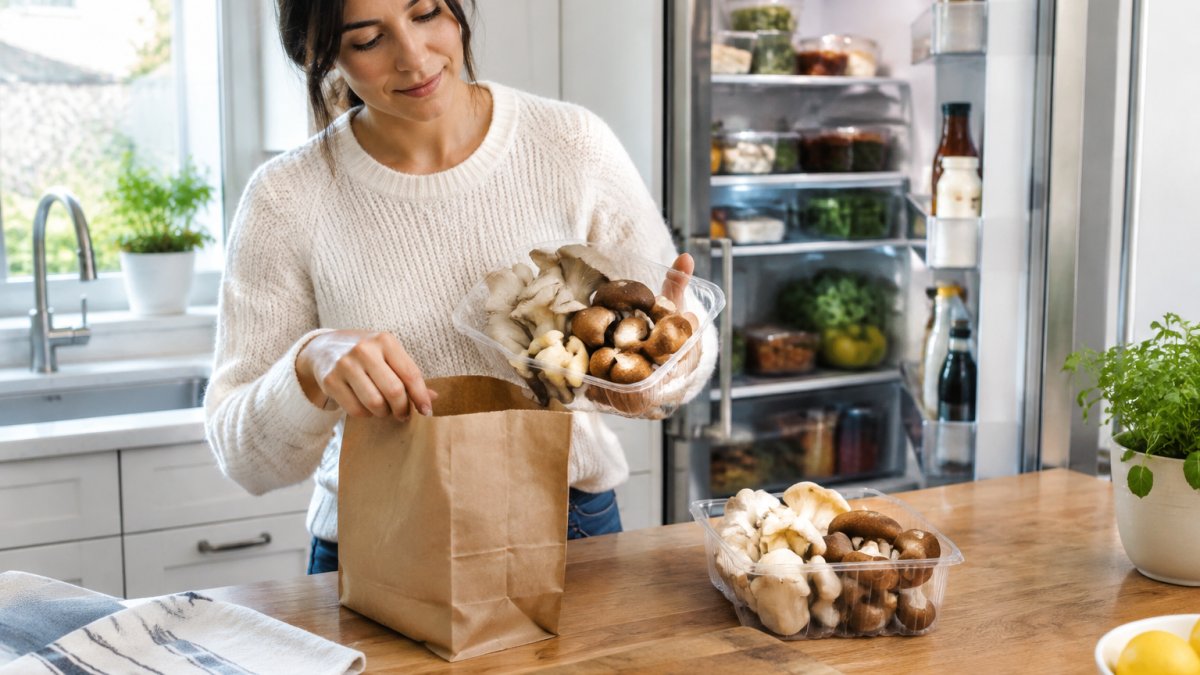
- Keep mushrooms in the original paper bag or move them to one
- Skip tight plastic wrap, which traps condensation
- Store in the crisper drawer, unwashed
- Wash only right before cooking
- Check daily and remove any that have gone soft
For a full breakdown of refrigeration, freezing, and drying methods, see our guide on how to store fresh lion's mane, which applies to most gourmet varieties.
Mushroom Preservation Techniques Worth Using
Preservation techniques work by removing one of the two things spoilage needs: water or warmth. Pick the method that fits how you plan to cook, and understand why it works so you can adapt it.
- Refrigeration: the default for anything you will use within a week. Cold slows respiration and microbial growth without changing texture. Most home fridges run warmer than the ideal, so keep mushrooms in the coldest part, not the door.
- Paper bag storage: simple, cheap, and better than plastic for short-term holding. Paper breathes, so it lets the carbon dioxide and moisture mushrooms release escape instead of condensing on the surface.
- Blanching and freezing: briefly cook, cool fast, and freeze. Blanching deactivates the enzymes that cause browning and texture breakdown, so the mushrooms hold up in sauces and stews.
- Drying: removes water so microbes cannot grow. Excellent for shiitake and other firm varieties. Our dried shiitake mushrooms can be rehydrated in warm water before use.
- Vacuum cooling and cold chain: what growers and distributors use to pull heat out fast after harvest. It is the reason a mushroom that never broke the cold chain arrives looking better.
A common mistake is freezing raw mushrooms. They turn mushy on thaw because ice crystals rupture cell walls. Blanch first, or cook them and freeze the finished dish.

Here is how storage conditions compare in practice:
| Storage Condition | Typical Shelf Life | What Drives It |
|---|---|---|
| Countertop, room temp | 1 to 2 days | Fast respiration, water loss |
| Fridge, original plastic wrap | 4 to 6 days | Condensation traps moisture |
| Fridge, paper bag | 5 to 7 days | Breathable, absorbs excess moisture |
| Fridge, sliced | 3 to 5 days | Cut surfaces, browning, microbes |
| Freezer, blanched | 6 to 8 months | Cold stops respiration |
| Dried | 6 to 12 months | Water removed below microbial needs |
To reduce waste from purchase to use, follow this checklist:
- Buy cold and fresh. Choose mushrooms that are dry, firm, and evenly colored, and check the harvest or pack date if it is printed.
- Get them cold fast. Move mushrooms to the fridge as soon as you get home; a warm car ride shortens their life.
- Keep them in paper, not plastic. Transfer to a paper bag or leave them in the original paper packaging, and open the bag slightly for airflow.
- Store unwashed. Wash only right before cooking, because surface moisture invites slime and mold.
- Check daily. Remove any that have gone soft or slimy so they do not spread moisture to the rest.
- Cook or preserve on time. Use within the fridge window, or blanch and freeze or dry what you will not finish.
Watch out: sealed plastic containers and damp paper towels are the two most common home-storage mistakes, because both trap the moisture mushrooms release and speed up slime and mold.
For a full breakdown of refrigeration, freezing, and drying methods, see our guide on how to store fresh lion's mane, which applies to most gourmet varieties.
When Spoilage Becomes a Food-Safety Problem
Not every change is a safety issue. Some is just quality loss. Learning the difference keeps you from throwing out good food, and from cooking with bad food.
Quality loss looks like this:
- Brown patches from enzymatic browning
- Slightly dry or shriveled caps
- Soft but still firm spots from bruising
- Mild earthy smell
These are cosmetic or texture problems. Trim the affected area and cook the rest soon.
Unsafe spoilage looks different:
- Slick, slimy film on the cap or stem
- Sour, ammonia, or fishy smell
- Dark, wet, matted gills
- Visible mold, especially green or black fuzz
- Mushrooms that feel mushy and fall apart
Watch out: slime and a sour smell are the clearest signs to discard the whole container, not just the bad pieces.
Order Fresher Mushrooms for Your Kitchen
Starting with fresher mushrooms gives you more days to use them. That is one reason Mushroom Direct focuses on small-batch harvests and next-day delivery.
Our Fresh Gourmet Medley Box arrives with free next-day delivery and a rotating mix of Lion's Mane, Maitake, King Oyster, Chestnut, and oyster mushrooms. Order today and cook with it tomorrow.

If you are new to ordering direct, our guide on ordering fresh gourmet mushrooms online explains what to check. And if you want to buy now, you can shop the fresh medley box in 3 lb or 5 lb sizes.
The gap between a mushroom that lasts two days and one that lasts a week usually comes down to how fresh it was when you got it and how fast you cooled it. We harvest in small batches, keep the cold chain short, and deliver next day so your mushrooms start their clock in your kitchen, not a warehouse. Get started with Mushroom Direct and cook with mushrooms that still taste like the farm.
Frequently Asked Questions
Are 2-week-old mushrooms safe to eat?
In most cases, no. Fresh mushrooms typically hold quality for about 5 to 7 days in the refrigerator, so two weeks is well past that window. Check for slimy patches, dark or black discoloration, a sour or fishy smell, and any visible mold. If the caps have gone soft or sticky, discard the whole container rather than trimming around the bad spots, since mold filaments and bacteria spread through the tissue faster than you can see.
Should mushrooms be stored in a paper bag or their original packaging?
A paper bag is usually the better choice for mushroom shelf life. It lets excess moisture escape while still holding enough humidity to slow water loss. Plastic wrap and sealed clamshells trap condensation against the caps, which speeds slime and microbial growth. If you buy pre-sliced mushrooms in a plastic container, open the film or move them into a paper bag once you get home, and keep the bag in the main compartment of the fridge rather than the crisper drawer, where airflow is often poor.
How can you extend the shelf life of fresh mushrooms?
Keep them cold, dry, and ventilated. Refrigerate mushrooms at roughly 34 to 38°F as soon as you get them home, store them in a paper bag or a container with airflow, and skip rinsing until you are ready to cook. Whole mushrooms outlast pre-sliced ones because cut surfaces brown and lose water faster. For longer storage, mushroom preservation techniques like sautéing then freezing, or drying, push usable life from days to months.
Can you keep mushrooms fresh without a refrigerator?
Only briefly. At room temperature, respiration and water loss run much faster, so fresh mushrooms may decline within a day or two. If you have no fridge space, spread them in a single layer in a cool, dark, well-ventilated spot and cook them within 24 hours. For anything longer, drying is the practical option: the dried shiitake and wild mushroom products in our shop can be rehydrated in warm water when you need them.
