

How to Choose Locally Grown Gourmet Mushrooms
Last Updated: November 1, 2026
Quick Summary
Locally grown mushrooms are harvested in small batches and reach kitchens in hours rather than days, so they keep firm caps, tight gills, and full aroma. Skipping the cold-storage chain means they sear instead of steam, which gives you browning and flavor, and they waste less because they don't spoil before you cook them.
- Ask growers when the batch was harvested, how it was stored, and what is in season this week.
- Keep mushrooms in paper or breathable packaging, since sealed plastic traps condensation and speeds spoilage.
- Store mushrooms in the main compartment of the fridge, not the crisper drawer, and cook them within a few days.
- Freeze only cooked mushrooms, never raw ones, and wipe with a damp cloth instead of rinsing.
- Slice king trumpet thick, score the cut side, and sear it hard in a dry pan before adding fat.
Table of Contents
- Why Locally Grown Gourmet Mushrooms Taste Better and Last Longer
- The Benefits of Fresh Edible Mushrooms for Everyday Cooking
- A Guide to Gourmet Mushroom Varieties and How to Use Them
- King Trumpet Mushroom Benefits and Why Chefs Rely on Them
- How to Store Fresh Mushrooms So They Stay Firm and Flavorful
- Sustainability, Food Safety, and the Local Food System
- Ordering Your First Local Mushroom Box
- Frequently Asked Questions
Why Locally Grown Gourmet Mushrooms Taste Better and Last Longer
The benefits of locally grown gourmet mushrooms start with time. A mushroom is mostly water and responds to oxygen the moment it's picked, so every hour between harvest and heat changes what lands on your plate. At Mushroom Direct, we harvest in small batches at our Queens farm and get orders to kitchens in a matter of hours, not days.
That gap is the whole story. Mushrooms shipped through a distribution chain spend days in cold storage, and they lose firmness and aroma along the way. Locally grown mushrooms skip that chain entirely.
Harvest-to-Kitchen Timing and Shelf Life
Fresh mushrooms hold peak quality for a short window. A common mistake is judging freshness by the sell-by date instead of the harvest date, which is the number that actually predicts how a mushroom will cook.
- Day 0 to 2: firm caps, tight gills, full aroma
- Day 3 to 5: softening edges, fading flavor
- Beyond that: water loss and a spongy bite
Ask any grower when the batch was picked. A local farm can answer to the hour. A warehouse pallet usually cannot.
The Local-vs-Imported Comparison Competitors Skip
Most guides discuss mushroom health or cultivation broadly but offer little direct comparison of local mushrooms with imported or mass-produced alternatives. The practical difference shows up in three places: transport distance, storage time, and handling.
Imported and mass-produced mushrooms typically move through cold storage and distribution hubs, which means more handling and more time for water loss. Local growers can often deliver in breathable packaging within a day or two of harvest. That shorter chain is why local mushrooms sear instead of steam, they haven't absorbed the moisture that builds up during long storage.
Storage and Shelf Life: How Freshness Affects Flavor and Waste
How you store fresh mushrooms is a moisture question. Mushrooms breathe, so sealed plastic traps condensation and speeds spoilage. Paper is the better answer.
- Keep mushrooms in the paper bag or breathable packaging they arrived in.
- Skip the rinse until you're ready to cook; wipe with a damp cloth instead.
- Store them in the main compartment of the fridge, not the crisper drawer.
- Cook within a few days of harvest for the best texture.
- Freeze only cooked mushrooms, never raw ones.
For lion's mane specifically, our post on how to store fresh lion's mane covers the details that keep it firm rather than soggy.
How to Evaluate Freshness and Find Local Growers
Seasonality and availability vary by region, so the most reliable way to source local mushrooms is to ask growers directly. At a farmers market or CSA pickup, ask when the batch was harvested, how it was stored after harvest, and what is in season this week. A local farm can answer to the hour; a warehouse pallet usually cannot. That transparency is the practical advantage of buying locally grown gourmet mushrooms, and it is the part of the freshness argument you can verify yourself. This direct connection to the source also informs the integrity of farm to table dining by ensuring that the ingredients on your plate reflect the same commitment to regional harvest cycles.
The Benefits of Fresh Edible Mushrooms for Everyday Cooking
The benefits of fresh edible mushrooms come down to what heat does to them. Fresh mushrooms sear instead of steam, because they haven't absorbed the moisture that builds up during long storage. That difference gives you browning, and browning is flavor.
Nutritionally, mushrooms are nutrient-dense and low in calories. The USDA FoodData Central database lists the nutrient profile of common edible mushrooms if you want the raw numbers per variety.
Practical guidance matters more than the label, though. Cook mushrooms thoroughly before eating, and treat "medicinal" claims with caution. Most functional mushroom research is early-stage, so enjoy them as food first.
A Guide to Gourmet Mushroom Varieties and How to Use Them
Gourmet mushroom varieties differ more in texture than in flavor, and texture decides how you cook them. Knowing which variety browns, which holds shape, and which turns silky tells you what to put on the menu.
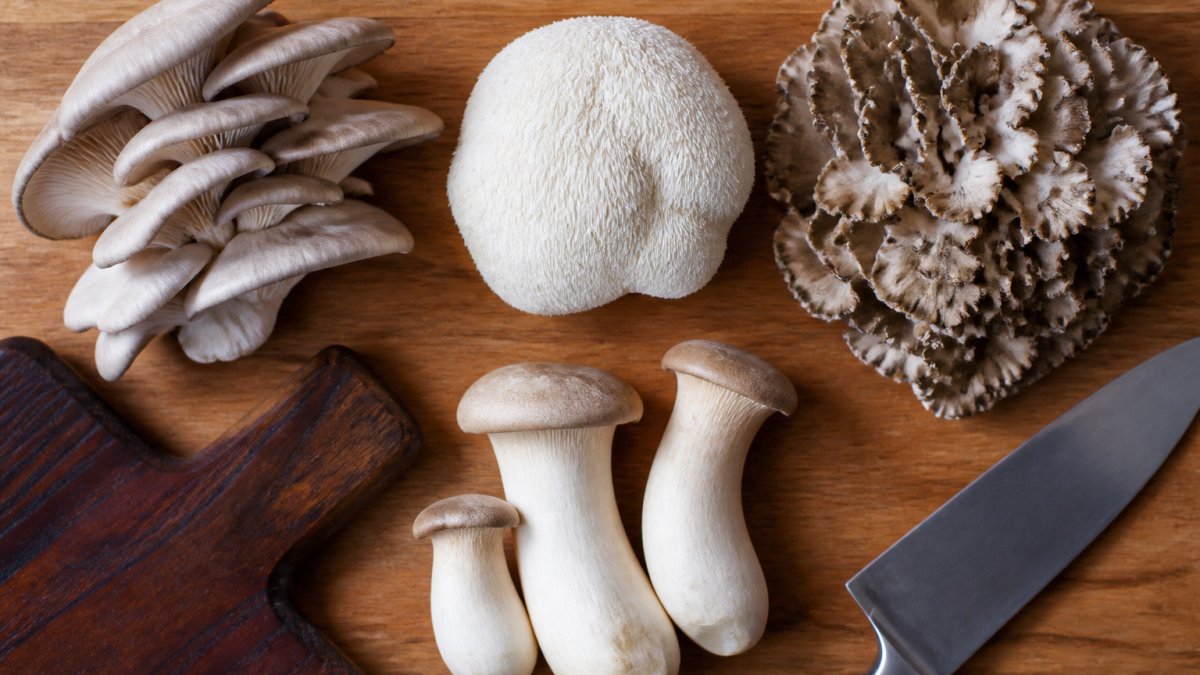
Oyster, Shiitake, Lion's Mane, and Maitake at a Glance
| Variety | Texture | Best Cooking Method | Flavor Note |
|---|---|---|---|
| Oyster | Tender, thin caps | Sauté, roast | Mild, faint anise |
| Shiitake | Meaty, firm | Sear, braise | Deeply savory |
| Lion's Mane | Pulls like crab | Pan-sear, roast | Seafood-adjacent |
| Maitake | Frilly, crisp edges | Roast, grill | Earthy, woodsy |
| King Trumpet | Dense, scallop-like | Grill, slice thick | Mild, buttery |
Lion's mane is the one home cooks ask about most, and it rewards a hot pan and a little patience. If you want the technique spelled out, our guide on how to cook lion's mane mushroom walks through searing, shredding, and roasting it.
King Trumpet Mushroom Benefits and Why Chefs Rely on Them
King trumpet mushroom benefits are mostly structural. The stem is thick and dense enough to slice into rounds, score, and sear like a scallop, which makes it the variety chefs reach for when a dish needs a meaty center rather than a garnish.
It also holds up. King trumpet keeps its shape through grilling and braising, so it survives a busy service without turning to mush. That reliability is why restaurant kitchens build menu items around it rather than treating it as an afterthought.
Fresh Gourmet Medley Box | Free Next Day Delivery →
For home cooks, slice it thick, score the cut side, and sear it hard in a dry pan before adding fat. It browns beautifully and takes on whatever sauce you finish it with.
How to Store Fresh Mushrooms So They Stay Firm and Flavorful
How to store fresh mushrooms correctly is a moisture question. Mushrooms breathe, so sealed plastic traps condensation and speeds spoilage. Paper is the better answer.
- Keep mushrooms in the paper bag or breathable packaging they arrived in.
- Skip the rinse until you're ready to cook; wipe with a damp cloth instead.
- Store them in the main compartment of the fridge, not the crisper drawer.
- Cook within a few days of harvest for the best texture.
- Freeze only cooked mushrooms, never raw ones.
Watch out: a sealed container with a paper towel at the bottom still traps enough humidity to slim oyster caps within a day or two. If your mushrooms came in plastic, move them to paper as soon as they arrive.
For lion's mane specifically, our post on how to store fresh lion's mane covers the details that keep it firm rather than soggy.
Sustainability, Food Safety, and the Local Food System
Sustainability in mushrooms starts with the substrate. Mushroom cultivation is a recycling process at its core: growers use agricultural waste like legume hulls, straw, and brewers' spent grain as the growing medium, and the spent substrate can then feed worms and build compost. That circular model is one of the clearest arguments for a local food system, but the argument gets stronger when you look at the specific mechanisms rather than the slogan.
What Local Actually Changes: Transport, Packaging, and Waste
A short supply chain means fewer food miles, but the more useful comparison is what happens to the crop between harvest and your kitchen. Imported and mass-produced mushrooms typically move through cold storage and distribution hubs, which means more handling, more packaging, and more time for water loss.
A common pattern among local growers is to reuse substrate inputs from nearby farms and to compost spent blocks rather than sending them to landfill. Ask a grower what happens to their spent substrate, the answer tells you more about their environmental practices than any label.
Food Safety and Handling: What to Ask a Grower
Traceability matters for food safety and handling. When you buy from a grower you can name, you know where the crop was grown and how it was handled. Practical questions to ask at a farmers market or CSA pickup:
- When was this batch harvested?
- How was it stored after harvest, refrigerated, in breathable packaging, or sealed?
- What substrate did you grow it on, and do you reuse or compost spent blocks?
- Do you have a food safety plan or follow good handling practices?
Mushrooms are mostly water and respond to oxygen the moment they're picked, so handling after harvest is not a minor detail. Cook mushrooms thoroughly before eating, and treat "medicinal" claims with caution, most functional mushroom research is early-stage, so enjoy them as food first.
The Local Food System Angle Competitors Miss
Most guides discuss mushroom health or cultivation broadly but offer little direct comparison of local mushrooms with imported or mass-produced alternatives. The practical takeaway is that local sourcing is less about a vague sustainability claim and more about a shorter, more traceable chain from harvest to heat, which affects flavor, texture, shelf life, and food waste at the same time.
Ordering Your First Local Mushroom Box
Ordering a local mushroom box is the fastest way to test the freshness argument for yourself. Start with a mixed box rather than a single variety, cook through it within a few days, and compare the texture against whatever you've been buying.
Our Fresh Gourmet Medley Box ships free next day, with a rotating mix of lion's mane, maitake, king oyster, chestnut, and oyster mushrooms in a 3 lb or 5 lb size. It's the right starting point for a home cook who wants variety without committing to a wholesale case.

If you'd rather shop by variety first, browse our locally grown mushrooms near you to see what's in season at the farm this week.
Frequently Asked Questions
How does buying locally grown mushrooms affect freshness?
A local grower can tell you the harvest date, which is the clearest sign of how fresh your mushrooms are.
Are gourmet mushrooms more nutritious than common button mushrooms?
Gourmet varieties like oyster, shiitake, lion's mane, and maitake are nutrient-dense, offering protein, fiber, B vitamins, potassium, and antioxidants. Button mushrooms carry similar nutrients but in different proportions. The bigger factor is freshness: mushrooms lose quality the longer they sit after harvest, so a freshly picked gourmet variety often delivers more flavor and better texture than a older common mushroom.
How should you store fresh gourmet mushrooms?
Keep mushrooms in a paper bag or a container lined with a paper towel, never sealed in plastic, so they can breathe without drying out. Store them in the refrigerator and use them within three to five days of delivery. Avoid washing until you are ready to cook; brush off dirt instead. If a batch is more than you can use, sauté it first, then freeze the cooked mushrooms for later.
Which gourmet mushrooms are best for cooking?
Our mixed boxes include a rotating selection of gourmet varieties, so you can try several at once.
The gap between a mushroom picked this morning and one that sat in a warehouse for a week is something you can taste in the first bite. Mushroom Direct grows in Queens, harvests in small batches, and delivers next day, with free delivery on featured boxes, rotating gourmet varieties, and a circular growing process that sends spent substrate back into compost. Get started with Mushroom Direct and cook with mushrooms that were still growing yesterday.
